Growing in Wisdom, Stature, and Favor

Jesus as a Boy in the Temple

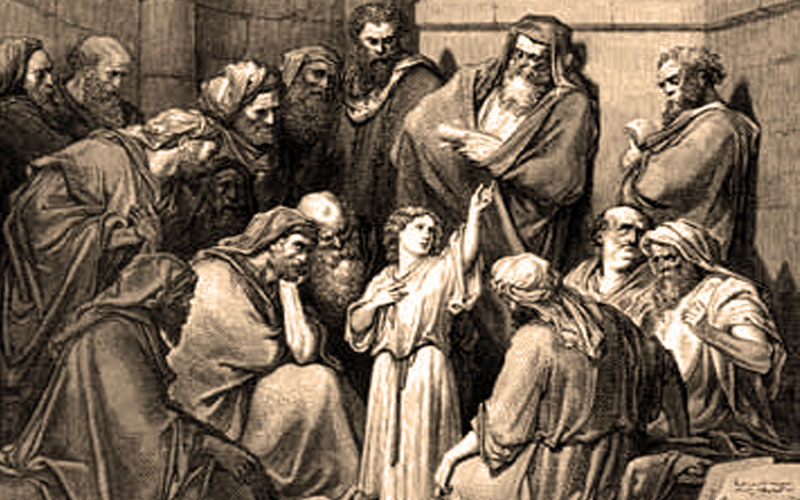
The four gospels focus primarily on the public ministry of Jesus leading up to His crucifixion and resurrection – a period of approximately three years. In addition to this, Matthew and Luke include some information about His birth and infancy. Luke also briefly records one event in Jesus’ childhood – the time when He was “lost” in the temple at twelve years old (Luke 2:41-51).

We may be curious about what happened as Jesus grew up, but the Scriptures are mostly silent about this. However, the Holy Spirit did see fit to include a statement about the growth of Jesus:

And Jesus kept increasing in wisdom and stature, and in favor with God and men” (Luke 2:52).

This may seem somewhat obvious and, therefore, almost insignificant. Yet this statement was given for a reason. If Jesus grew in wisdom, stature, and favor, then it should be expected for us to do the same. In this article, we are going to consider how we can grow in each of these areas.Continue Reading
The Hills and Vales of Bethany

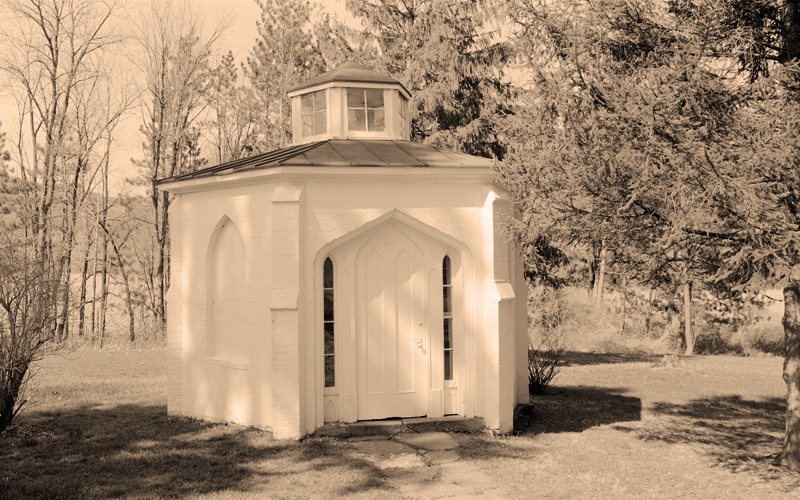
Alexander Campbell's study

Alexander Campbell (1788-1866) is recognized as one of the leading figures in the Restoration Movement. However, his influence did not come as a result of him preaching for a large congregation or because he lived in some big city. Instead, he lived “among the hills of Western Virginia” as Moses E. Lard wrote in the excerpt below. In fact, Lard suggested that the place in which Campbell resided was surprisingly advantageous to him and his work.

“Besides, we can not but think that the very location he chose for his home was specially designed for him in the providence of God, and that it had no small influence on the great work he did. He sat down among the hills of Western Virginia, on the little stream of Buffalo, amid a hardy, simple population, who had no more power to appreciate him than they had to compute the distance from their respective doors to the most distant star. Here he lived in comparative seclusion to the day of his death, dwelling in the same house in which he had married his first wife, and in which his children were born. True, in the course of time, he collected around him a few highly cultivated and gifted friends, as professors in his beloved college. These accomplished brethren were his life-long friends, and helped him much. Still must it be said that for the most part he dwelt alone, far away from the great marts of trade and centres of literature and fashion. Whether these could ever have had any influence on him or not, we, of course, are not able to say; but of this we feel glad, that he dwelt remotely from them. The pride of his life was thus passed in the lap of his own romantic hills.

“Here on the Lord’s day, for many a year, in a rude, untidy little meeting-house, he wasted the splendors of his great mind. His dozy congregation often numbered not more than fifty. They had wound down their hill-side paths to hear him preach. Many of them passed the time as unconsciously as did the bodies of the dead, which slept in the yard close by. Others lent him a drowsy ear, as incapable of appreciating his masterly inductions as were the kine that browsed on his pastures.

“The week he would pass in his study, amid his choice books, illumining and spicing the pages of his immortal Christian Baptist, or enriching with his riper and more sober thought his great Harbinger. Many a piece of a day he spent wandering beside his winding Buffalo, or clambering over its neighboring woody slopes. Here, often seated on a log, or perched like the wild mountain bird on some lone rock, he would pass unconscious hours deep wrapped in thought, or searching the meaning of some dark text in his Greek Testament. If he passed a teamster stuck in the mud, he clapped his burly shoulder to the wheel, and shouted to the team, as if he had been bred to the cart and its toils. If he passed a ragged orphan boy, he stopped him, asked for his mother, gave him his secret penny, and then wept over him tenderly as did the Savior with the stricken Martha and Mary. Such were the scenes amid which he ripened and mellowed for the work to which God in his mercy called him.

If the flocks of Midian were the most fitting school in which to train Moses for his immortal mission, were not the oak-covered hills and deep shadowy vales of Bethany the very spot in which to nurse this great restorer of the gospel to the age in which we live? We can not but think that one greater than he had much to do in fixing even his home where it stood. Being here alone he was left free to prosecute his studies and pursue his thoughts in his own original way, with no interference from those great local and religious forces which are constantly at work in large cities. He thus studied Christianity in the light of nature, because in the light of his own unperverted mind. Never could he have succeeded otherwise.” (The Reformation for Which We Are Pleading, p. 159-160).

Continue Reading

Monthly News Roundup (06.24.21)

Subscribe: Apple Podcasts | Google Podcasts | Stitcher | Spotify | RSS

Plain Bible Teaching Podcast

This is the last episode for the month of June – time for our monthly news roundup. In this episode, we’ll be talking about the number of Americans who are reading the Bible, the Department of Education and transgender students, and the effects of the pandemic on our emotional well-being.Continue Reading

I.B. Grubbs’ Six Rules of Biblical Hermeneutics

I.B. Grubbs, rejecting legalism

When it comes to studying the Bible, it is common for people to come away with their own understanding of the word of God. Many see nothing wrong with this, despite the varied and sometimes conflicting interpretations people have of the Scriptures. However, when Paul wrote to the brethren in Ephesus, he said, “By referring to this, when you read you can understand my insight into the mystery of Christ” (Ephesians 3:4). He did not expect each of them to have their interpretation of the epistle he wrote by inspiration. Instead, he expected them to have the same understanding as he did. The only way this could happen is for each one to follow a common set of principles as they try to determine the meaning of a particular passage under consideration.

Isaiah Boone Grubbs (1833-1912) was a preacher and also a professor at the College of the Bible in Lexington, KY at the end of the nineteenth century and into the early part of the twentieth century. In the introduction to his material on the epistles of First and Second Corinthians and Galatians,* he outlined six hermeneutical rules that would allow students of the Bible to properly interpret the text. (Hermeneutics simply means “the study of the methodological principles of interpretation (as of the Bible).”**) These principles are not unique to Bible study; rather, they are the same principles that can be used to correctly identify the meaning behind any body of instruction or teaching.

So let us briefly consider these six rules for Biblical hermeneutics.Continue Reading

Thankful (Part 1): Thankful for God’s Word

Thankful

Seven times a day I praise You, because of Your righteous ordinances” (Psalm 119:164).

We have many different reasons to praise God and give thanks to Him. In the passage above, the psalmist mentioned God’s “righteous ordinances” as a reason to praise Him. He was referring to the word that God revealed to man (the entire psalm is dedicated to His word). Not only is this something for which we should be thankful, but it also reveals to us many other reasons for us to give thanks to God. So we will consider it in the first part of this series.Continue Reading

Taking Personal Responsibility

Pointing at ManIn a time of lockdowns, shelter-in-place orders, and social distancing, we are more cut off from others than we had been previously. Obviously, there are challenges to this type of social arrangement – including spiritual challenges. One such challenge is that it is increasingly important for each of us to take personal responsibility for our faith and our standing before God. Paul mentioned this idea in his letter to the brethren in Philippi:


So then, my beloved, just as you have always obeyed, not as in my presence only, but now much more in my absence, work out your salvation with fear and trembling” (Philippians 2:12).

Paul wanted these brethren to maintain their faithfulness even when he was absent from them and could not encourage them in person. The reason for the lack of in-person interaction is different today. And, of course, Paul was only speaking of himself as being absent from them; the brethren in Philippi were still together. However, the challenge described by Paul is the same. We must maintain our faithfulness, even without the in-person encouragement we are used to receiving from other Christians.

In this article, we are going to notice why personal responsibility is important, some ways in which we are to take personal responsibility, and also why taking personal responsibility should never cause us to think that isolation from fellow Christians is to be preferred.Continue Reading

Tolbert Fanning’s Seven Rules for Studying the Bible

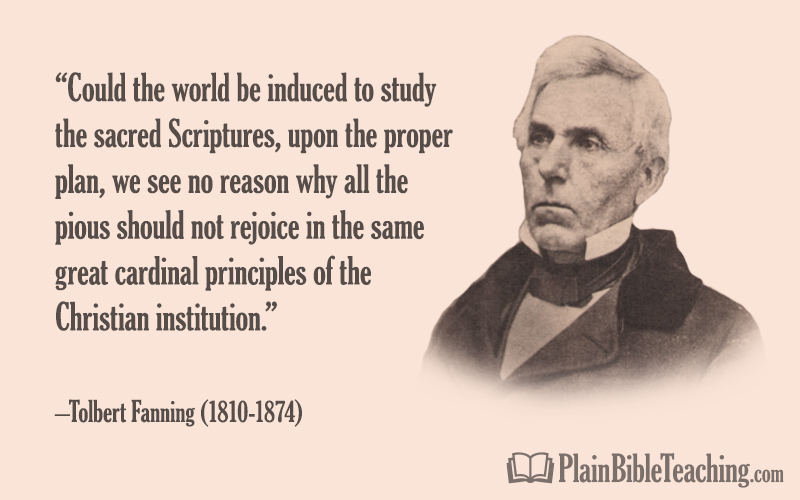
Tolbert Fanning: Study upon the Proper Plan

Most religiously-minded people will affirm that reading the Bible is vital. Many of these would also say that studying the Scriptures is important. Yet among those who read and study the Bible, there is usually a wide range of beliefs and practices that often conflict with and contradict one another. Is this to be expected and accepted? Or is that a sign that we should re-evaluate our approach in studying the Bible?

Tolbert Fanning (1810-1874) was a preacher from Tennessee who had a strong influence among brethren in the South. In his book The True Method of Searching the Scriptures, he outlined seven rules for studying the Bible. As we consider these rules, we will see that these are not just one man’s opinion; instead, these are some basic principles we need to apply if we are to understand God’s word in the way He intended us to understand it.

So let us briefly consider these seven rules for studying the Bible.Continue Reading