The New Ancient Paths

Path

Thus says the Lord, ‘Stand by the ways and see and ask for the ancient paths, where the good way is, and walk in it; and you will find rest for your souls’” (Jeremiah 6:16).

The passage above has been rightly used by brethren to emphasize the need to go back to the word of God for our standard rather than following after something “new” that has been invented in the mind of man. We are to “retain the standard of sound words” which has been preached by the apostles (2 Timothy 1:13).

However, we should not confuse “the ancient paths” with what we have always thought, heard, or been taught. They are not always the same thing. In other words, the word of God is true whether we have heard it before or not. The Biblical teaching on any given issue is right, even if we have never previously considered it. God’s word is perfect (Psalm 19:7; James 1:25); man is not (Romans 3:23). Therefore, any conflict between what the Bible says and what man says can be easily resolved – the Bible is always right. Paul wrote, “Let God be found true, though every man be found a liar” (Romans 3:4).
Continue Reading
Advice to Young Preachers (Season 1, Episode 5)

Subscribe: iTunes | Stitcher | RSS

Advice to Young Preachers (Season 1, Episode 5)

This episode discusses several pieces of advice to young preachers. These are not bits of wisdom that I have discovered through decades of experience in preaching the gospel – in fact, I am still a relatively young preacher myself. Rather, they are admonitions that are taken from the word of God that all young (and older) preachers should follow. The following points are discussed in this episode:

  1. Preach the word.
  2. Study your Bible.
  3. Test all things carefully.
  4. Preach plainly and distinctly.
  5. Seek to please God and not man.
  6. Guard against a party spirit.
  7. Know when and when not to compromise.
  8. Do not view preaching as a “job.”
  9. Do not gauge success by numbers.
  10. Put the brethren in remembrance.

Article: Advice to Young Preachers

If you found this episode to be useful, please share it with others. Also, if you enjoyed the podcast, please leave a rating on iTunes or Stitcher. This also helps others hear about the podcast. Thanks.

What Makes One a Preacher? (Season 1, Episode 4)

Subscribe: iTunes | Stitcher | RSS

What Makes One a Preacher? (Season 1, Episode 4)

This episode discusses the right and wrong reasons for preaching and for one being recognized as a preacher. The reasons discussed are listed below:

Wrong reasons: One is a preacher, NOT because…

  1. He was “called” to preach.
  2. He received an education to preach.
  3. He has been “ordained” to preach.
  4. He is paid to preach.
  5. He wants the praise of men.

Right reasons: One is a preacher because…

  1. He has chosen to preach.
  2. He has made preparations to preach.
  3. He has opportunities to preach.

Article: What Makes One a Preacher?

If you found this episode to be useful, please share it with others. Also, if you enjoyed the podcast, please leave a rating on iTunes or Stitcher. This also helps others hear about the podcast. Thanks.

Sharing the Gospel with Theophilus

Luke

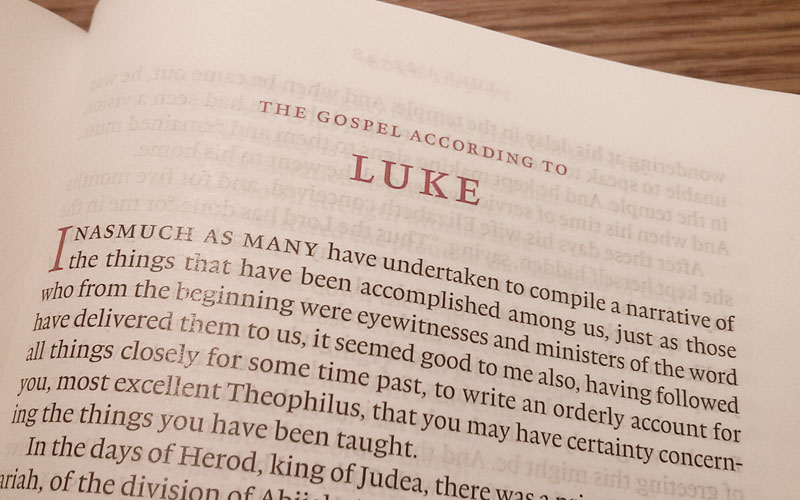
When Luke wrote his gospel account, he addressed it to an individual named Theophilus. If we look at the writer’s introduction to the book, we will see some important lessons that we can apply to our efforts to share the gospel with others today.

Inasmuch as many have undertaken to compile an account of the things accomplished among us, just as they were handed down to us by those who from the beginning were eyewitnesses and servants of the word, it seemed fitting for me as well, having investigated everything carefully from the beginning, to write it out for you in consecutive order, most excellent Theophilus; so that you may know the exact truth about the things you have been taught” (Luke 1:1-4).

Let us consider some points about Luke sharing the gospel with Theophilus.
Continue Reading

Thoughts on the Bible-Minded Cities Report

2015 Bible-Minded Cities

The Barna Group released a report on “Bible-Minded” cities. The report ranked the “Bible-mindedness” of individuals in the 100 largest media markets in the United States. According to the criteria of the Barna Group, an individual is “Bible-minded” based on two qualifications:

  1. They “report reading the Bible in a typical week.”
  2. They “strongly assert the Bible is accurate in the principles it teaches.”

It is interesting to read reports like this one. Regardless of how “Bible-minded” the cities are in which we live, there are some points we should consider.
Continue Reading

Reading Denominational Authors

Reading

With the rise of social media in our modern age, it is easy to share information with others. The information we share often includes what books and articles we have read. I have observed that, in general, brethren read a lot that is written by denominational authors on spiritual topics – possibly more than they read the writings of other brethren.

It is not necessarily wrong for brethren to read the writings of denominational authors. In some cases it can even be helpful. However, we need to be careful. Let me offer the following considerations.
Continue Reading

The Root of the Problem (Part 4): Ignorance

The Root of the Problem: Why We Sin & How We Can Overcome

Laws are often violated by those who do not know that they are breaking a law. In these cases, a transgression is made, regardless of the offender’s knowledge of the statute. It is not uncommon for one to claim that he was unaware of the law he was breaking. Even if this is true, he still stands to be punished for his violation.

This concept is not hard to understand in our society’s legal system. Yet when it comes to God’s law, people often choose to look at it very differently. As long as they do not know that what they are doing is wrong, they are perfectly content to assume that they are doing right. They refuse to consider the fact that our sins will still condemn us. Ignorance is no more of an excuse to be used before God than it is for human authorities.
Continue Reading