The New Ancient Paths

Path

Thus says the Lord, ‘Stand by the ways and see and ask for the ancient paths, where the good way is, and walk in it; and you will find rest for your souls’” (Jeremiah 6:16).

The passage above has been rightly used by brethren to emphasize the need to go back to the word of God for our standard rather than following after something “new” that has been invented in the mind of man. We are to “retain the standard of sound words” which has been preached by the apostles (2 Timothy 1:13).

However, we should not confuse “the ancient paths” with what we have always thought, heard, or been taught. They are not always the same thing. In other words, the word of God is true whether we have heard it before or not. The Biblical teaching on any given issue is right, even if we have never previously considered it. God’s word is perfect (Psalm 19:7; James 1:25); man is not (Romans 3:23). Therefore, any conflict between what the Bible says and what man says can be easily resolved – the Bible is always right. Paul wrote, “Let God be found true, though every man be found a liar” (Romans 3:4).
Continue Reading


The Church Gathered Together

Two Men Praying

Togetherness is a characteristic seen in the Lord’s church throughout the book of Acts. Let us briefly consider the examples of the church gathering together and see what lessons we can learn.
Continue Reading

Mediocre Christianity

Swamp

The church in Laodicea was condemned for being “lukewarm” (Revelation 3:16). They thought they were in “need of nothing” (Revelation 3:17), but they were not healthy spiritually. Jesus told them they needed to “be zealous and repent” (Revelation 3:19).

At times, we may be like the Laodiceans – not what we should be as Christians, but not completely unfaithful either. We may not be zealously serving God, but are also not willfully rejecting Him either. Instead, we are in a state of spiritual mediocrity. What does this look like in our individual lives? When we find ourselves in such a state, how can we change it? That is what we will consider in this article.
Continue Reading

The Psalm of the Word (Part 6): Liberty

The Psalm of the Word

May Your lovingkindnesses also come to me, O Lord,
Your salvation according to Your word;

So I will have an answer for him who reproaches me,
For I trust in Your word.

And do not take the word of truth utterly out of my mouth,
For I wait for Your ordinances.

So I will keep Your law continually,
Forever and ever.

And I will walk at liberty,
For I seek Your precepts.

I will also speak of Your testimonies before kings
And shall not be ashamed.

I shall delight in Your commandments,
Which I love.

And I shall lift up my hands to Your commandments, which I love;
And I will meditate on Your statutes.

(Psalm 119:41-48)

How can it be said that we have liberty when we are also bound to follow God’s law? Many people are confused by this concept. But let us consider David’s words about following God’s law and walking at liberty.
Continue Reading

Those Who Have No Right to Speak God’s Word

Microphone

We sometimes hear celebrities, politicians, and other godless people quoting (or misquoting) the Bible. They often do so in an attempt to defend an unscriptural position (e.g. support for same-sex “marriage,” opposition to the death penalty, etc.). When we hear them, we might think, “What business do they have in speaking about the Bible?” God asked the same type of question in the following text.

But to the wicked God says, ‘What right have you to tell of My statutes and to take My covenant in your mouth? For you hate discipline, and you cast My words behind you. When you see a thief, you are pleased with him, and you associate with adulterers. You let your mouth loose in evil and your tongue frames deceit. You sit and speak against your brother; you slander your own mother’s son. These things you have done and I kept silence; you thought that I was just like you; I will reprove you and state the case in order before your eyes” (Psalm 50:16-21).

There are certain ones who have no right to speak God’s word. Let us notice who was identified in the text.
Continue Reading

Ten Years

Deep in Thought

So, remove grief and anger from your heart and put away pain from your body, because childhood and the prime of life are fleeting” (Ecclesiastes 11:10).

Every hour, day, and year that passes is forever lost. Once time has passed, we can never get it back. Jesus said it is impossible to “add a single hour” to our lives (Matthew 6:27).

Within the last year, I have hit three different ten-year milestones in my personal life – the tenth birthday of my oldest son; ten years working with the church in Morgantown; and, with this article, closing out the first ten years of Plain Bible Teaching. This has led me to reflect upon how much can happen in a decade. So in this article, we are going to focus on five different ten-year periods in the Bible and see what lessons we can learn.
Continue Reading

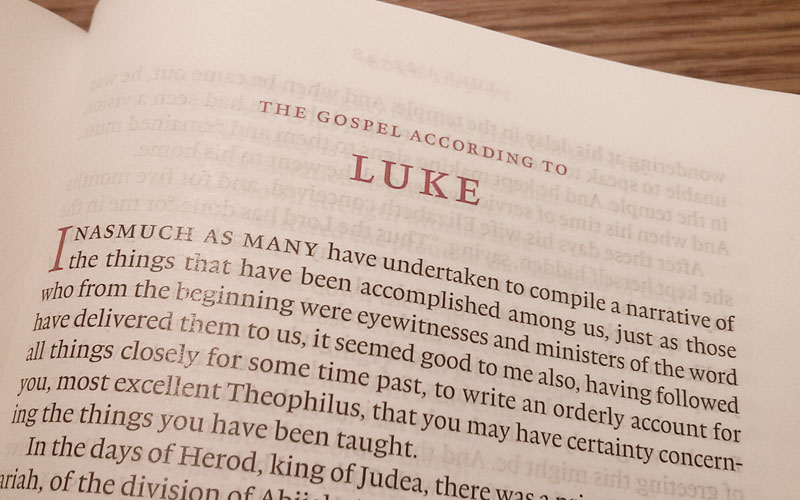
Sharing the Gospel with Theophilus

Luke

When Luke wrote his gospel account, he addressed it to an individual named Theophilus. If we look at the writer’s introduction to the book, we will see some important lessons that we can apply to our efforts to share the gospel with others today.

Inasmuch as many have undertaken to compile an account of the things accomplished among us, just as they were handed down to us by those who from the beginning were eyewitnesses and servants of the word, it seemed fitting for me as well, having investigated everything carefully from the beginning, to write it out for you in consecutive order, most excellent Theophilus; so that you may know the exact truth about the things you have been taught” (Luke 1:1-4).

Let us consider some points about Luke sharing the gospel with Theophilus.
Continue Reading