Amos may be the one in our series with whom people are most unfamiliar. Yet his is a powerful example of one who had the courage to speak out – to proclaim the truth and condemn error.
Continue Reading
Amos may be the one in our series with whom people are most unfamiliar. Yet his is a powerful example of one who had the courage to speak out – to proclaim the truth and condemn error.
Continue Reading

Asking questions is a good way for one to learn about the truths taught in the Bible. Even when the questioner is not seeking knowledge, but attempting to cast doubt or attack the Bible believer, questions can often provide an opportunity to teach others as the critic is answered.
The Bible contains several examples of good questions – some by those who were honestly seeking the truth, some by those who were trying to attack the truth. Examining these questions will help us to learn or be reminded of some important lessons that God has revealed to us in His word. So in this article, we will look at some of these good questions that we find in the Scriptures.
Continue Reading
It is incumbent upon Christians to be ready to teach others. Religious discussions will take place in different environments – friendly/hostile, public/private, in-person/online, etc. How do we make the best use of our opportunities to discuss the Scriptures with others? By remembering some rules for religious discussions.
Continue Reading

Psalm 119 contains 176 verses arranged in twenty-two stanzas. The entire psalm is dedicated to the praise of God’s word. The second stanza begins with a question: “How can a young man keep his way pure?” (Psalm 119:9). As we might expect, the answer to this question is found in the word of God.
Of course, the answer to this question is not limited in application to young men. It is profitable for all of God’s people. So let us examine this passage and see how we can keep our way pure before God.
“How can a young man keep his way pure? By keeping it according to Your word. With all my heart I have sought You; do not let me wander from Your commandments. Your word I have treasured in my heart, that I may not sin against You. Blessed are You, O Lord; teach me Your statutes. With my lips I have told of all the ordinances of Your mouth. I have rejoiced in the way of Your testimonies, as much as in all riches. I will meditate on Your precepts and regard Your ways. I shall delight in Your statutes; I shall not forget Your word” (Psalm 119:9-16).
David mentioned eight things we can do to help keep our way pure.
Continue Reading
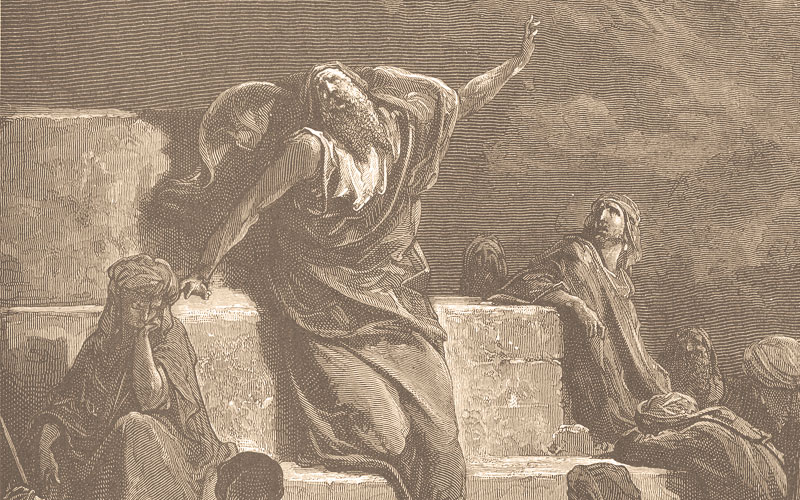
Even before he was conceived, Jeremiah was specifically appointed by God as a prophet (Jeremiah 1:5). We may not be called to do the work of a prophet today (cf. 1 Corinthians 13:8-10), but we can still learn from the instructions which were given to Jeremiah. We are obligated to teach and defend the truth (1 Timothy 3:15; Philippians 1:16-17). Studying Jeremiah’s commission helps us to learn how to do this.
“Then the Lord stretched out His hand and touched my mouth, and the Lord said to me, ‘Behold, I have put My words in your mouth. See, I have appointed you this day over the nations and over the kingdoms, to pluck up and to break down, to destroy and to overthrow, to build and to plant’” (Jeremiah 1:9-10).
There were six things that Jeremiah would do in his prophesying – (1) pluck up, (2) break down, (3) destroy, (4) overthrow, (5) build, and (6) plant. These are the same six things we must do in our teaching today.
Before we consider these six things, it is important to note that all of this would be accomplished with the words of God (Jeremiah 1:9). In the same way, we will accomplish these six things by speaking “as the oracles of God” (1 Peter 4:11, NKJV). We must not look to human wisdom, commandments, traditions, or opinions to accomplish our goals in teaching. Instead, we must look exclusively to the word of God.
So let us notice the six things we must do as we teach God’s word.
Continue Reading
As we noticed in the previous section, we should never underestimate the power of words – both good and evil. Understanding how important our speech is, we must be sure that our words reflect wisdom at all times.
Continue Reading
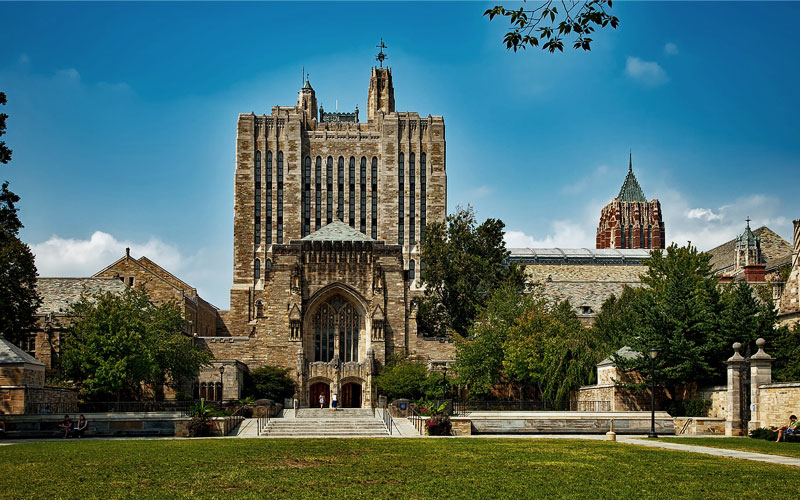
In our society, a great deal of emphasis is placed upon obtaining a college education in order to prepare for secular employment. For many careers, this is helpful. For some, it is essential. Therefore, many people pursue a secular education in an institution of higher learning in order to best prepare themselves to find what they consider to be good jobs.
However, there is a type of education that is far more important than the education that prepares one for employment. This higher education is not for secular pursuits, but spiritual. It prepares us not for the work force (at least not directly), but for our service to God. Its purpose is not to help us obtain a high-paying job with good benefits, but to help us obtain eternal life.
Strangely, some act as though an institution devoted to secular education is also the preferred institution for their spiritual education. But God has created His own institution of higher education – the church. It has everything we need for the pursuit of a higher (i.e. from God) education. Let us notice what the Bible says about this institution of higher education.
Continue Reading









What does “propitiation” mean? How is “justification” connected to salvation? What does “sanctification” look like in our day-to-day lives? The Bible uses some powerful words to describe God’s plan to save mankind. However, these words are not always easy to understand, especially when they are not part of our everyday vocabulary. This book explores key Bible terms that unlock the message of the gospel.
Big Words in the Bible examines five important words – Propitiation, Reconciliation, Sanctification, Justification, and Resurrection – using plain language to see how the Scriptures describe these concepts and how the apostle Paul employs them in his letter to the Romans. This book also contains an appendix with eleven additional articles to explore these topics further.
Whether you are new to the Bible and want to grow in your understanding or want a simple way to explain these core gospel doctrines to others, this book will be helpful. With a focus on the Scriptures, Big Words in the Bible helps break down these fundamental topics to shed light on the life-changing message of the gospel and the salvation found in it.
Available in print and digital format.

This work is licensed under a Creative Commons Attribution-NonCommercial-ShareAlike 3.0 Unported License.
If you have further questions about using any of the material on this site, please contact me.