The Gospel in the Same Words as Peter Preached It

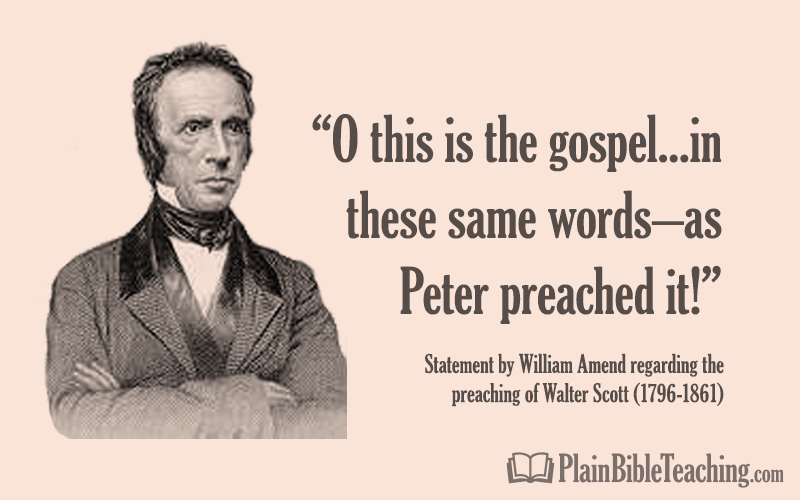
Walter Scott – The gospel as Peter preached it

Walter Scott (1796-1861) was one of the early preachers of the gospel in Northeast Ohio and did much to advance the cause of the ancient gospel in that area. In the book, Buckeye Disciples, author Henry K. Shaw noted that without the contributions of Walter Scott in proclaiming the gospel, “it is doubtful if the movement would have gained such momentum in a few years” (p. 45).

However, this “momentum” was not wholly due to the ability or zeal of men like Scott. Many people at that time were waking up to the idea that the gospel that was preached by the apostles was not the same message as the one being proclaimed by denominational preachers. Notice the following example of an individual named William Amend:Continue Reading
The Fall of Laish

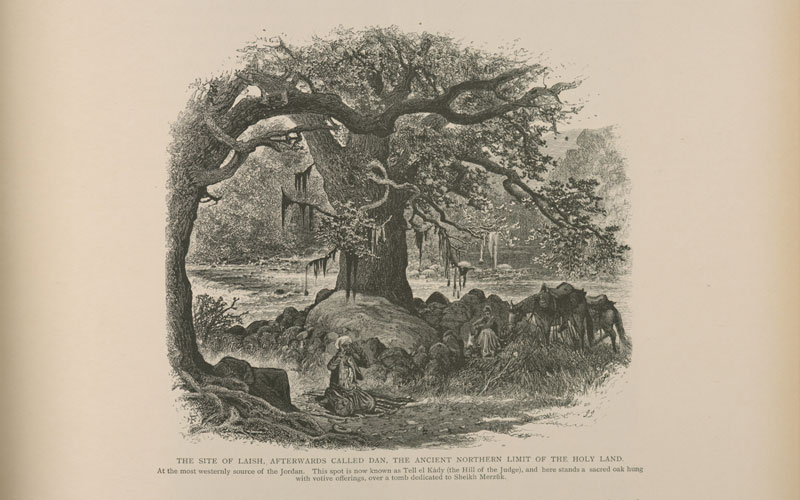
Laish

During the days of the judges, the tribe of Dan “was seeking an inheritance for themselves to live in” (Judges 18:1). Five men were sent to spy out the land and find a place they could take as their possession. As they searched the land, they found a suitable target – the city of Laish.

Then the five men departed and came to Laish and saw the people who were in it living in security, after the manner of the Sidonians, quiet and secure; for there was no ruler humiliating them for anything in the land, and they were far from the Sidonians and had no dealings with anyone” (Judges 18:7).

Then they…came to Laish, to a people quiet and secure, and struck them with the edge of the sword; and they burned the city with fire. And there was no one to deliver them, because it was far from Sidon and they had no dealings with anyone, and it was in the valley which is near Beth-rehob. And they rebuilt the city and lived in it. They called the name of the city Dan, after the name of Dan their father who was born in Israel; however, the name of the city formerly was Laish” (Judges 18:27-29).

Continue Reading

The Real Pharisees: Conclusion

The Real Pharisees

So who are the real Pharisees? As we have seen in this study, the way they are described in the Scriptures is often not what is intended by those who would use the label today.
Continue Reading

By What Are We Justified?

Man at sunset

The concept of justification is of major importance in the gospel. But what does it mean to be justified? Thayer defines the word as declaring or pronouncing one to be just, righteous, or such as he ought to be.

In the New Testament, justification is about God recognizing us as being righteous or right before Him. This divine recognition is key. We are not righteous simply by declaring ourselves to be righteous. We may claim it, but that does not make it so. How then can we be justified? The New Testament mentions several things by which we are justified. We will notice them in this article.
Continue Reading

13th Year of Plain Bible Teaching

Open Bible

The first year of Plain Bible Teaching began on August 1, 2005. After completing twelve years now, the thirteenth year begins today. I want to extend a big “thank you” to all of you for reading, commenting, and sharing this material with others. My goal has always been to publish materials that can accurately be described as “plain Bible teaching” so that those who read might be taught or be reminded of how to please the Lord and understand His will.
Continue Reading

The Real Pharisees (Part 17): The Pharisees Wanted to Hold Onto Parts of the Old Law

The Real Pharisees

But some of the sect of the Pharisees who had believed stood up, saying, ‘It is necessary to circumcise them and to direct them to observe the Law of Moses’” (Acts 15:5).

Despite all of the problems that we have seen with the Pharisees throughout this study, some of them had evidently believed and obeyed the gospel. A notable example of this was Paul (Acts 26:5; 9:1-18). However, many of them held onto the same attitudes and continued to be “zealous for the Law” (Acts 21:20).

Because of this, certain ones came to Antioch – a church with a large number of Gentile disciples (Acts 11:19-21) and where they were “first called Christians” (Acts 11:26) – and taught, “Unless you are circumcised according to the custom of Moses, you cannot be saved” (Acts 15:1). Luke recorded that “Paul and Barnabas had great dissension and debate with them” (Acts 15:2) because this teaching would effectively bring these disciples “into bondage” (Galatians 2:4).
Continue Reading

The Real Pharisees (Part 16): The Pharisees Overemphasized Making Converts

The Real Pharisees

Woe to you, scribes and Pharisees, hypocrites, because you travel around on sea and land to make one proselyte; and when he becomes one, you make him twice as much a son of hell as yourselves” (Matthew 23:15).

One might wonder how it could be possible to overemphasize making converts. After all, one of the principal works that we have been given – both individually and collectively – is to try to turn people to the Lord. The New Testament places a good deal of emphasis on making converts.
Continue Reading