Stagnant in Spirit

Swamp

The following is a portion of the revelation against Jerusalem that was received by the prophet Zephaniah:

It will come about at that time that I will search Jerusalem with lamps, and I will punish the men who are stagnant in spirit, who say in their hearts, ‘The Lord will not do good or evil!’ Moreover, their wealth will become plunder and their houses desolate; yes, they will build houses but not inhabit them, and plant vineyards but not drink their wine’” (Zephaniah 1:12-13).

This prophecy was against those who were “stagnant in spirit” or “settled in complacency” (NKJV). As it was in the days of Zephaniah, complacency is still a threat to God’s people today. Complacency keeps us focused on the here and now rather than fixing our eyes on the goal of heaven. Complacency keeps us from improving our service to God and forsaking our sins. Complacency keeps us from being pleasing to God, thereby setting us up for punishment. So let us consider how these people were “stagnant in spirit” so that we might not be the same.
Continue Reading
Reasons to Love Our Brethren

1 John 4:7

One of the themes emphasized in John’s first epistle is love. In particular, the inspired apostle stressed the importance of loving our brethren in Christ: “Beloved, let us love one another” (1 John 4:7). In this short letter, John provided at least nine reasons why we should love one another. Let us briefly notice each of these.

Why should we love our brethren?
Continue Reading

Do the Ends Justify the Means?

Young man thinking

You have likely heard the phrase, “the ends justify the means.” Most people believe this concept, at least in certain applications. The idea is that if the end result is good, then it does not matter if the means to that end are wrong – all that really matters is the end result.

Common examples of this mindset are to say that it is fine to lie as long as it is done for a good purpose (to spare someone’s feelings, prevent embarrassment, advance yourself, etc.), or that it is acceptable to steal in order to feed one’s family. However, the word of God – our standard for morality – clearly defines lying and stealing as being wrong (Ephesians 4:25, 28). A noble purpose does not justify sinful behavior.

There are many applications we can make regarding the false concept of the ends justifying the means. But in this brief article, I want to focus on the area of evangelism.
Continue Reading

The Foundation for a Godly Society

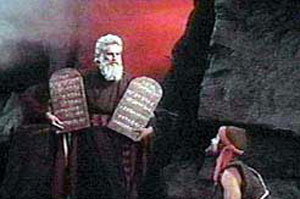
Moses and the Ten CommandmentsThe Ten Commandments (Exodus 20:1-17) – the laws engraved onto stone which God delivered to Moses for the children of Israel – give us the blueprint for the foundation of any godly or righteous society. These Ten Commandments are regularly assaulted by those on the “left” as having no place in our government or our schools. The stated reason for their opposition is that the Ten Commandments represent a religious element that has no place in anything related to government. Yet the Ten Commandments represent more than just religion. The reason there is such strong opposition to the display of the Ten Commandments by the “left” is because the Ten Commandments stand in direct opposition to the Liberal’s ideal for society.
Many today view the Ten Commandments as part of the foundation of our religion. Yet they are part of the Old Law which was nailed to the cross (Colossians 2:14). Does this mean they are of no value for us today? Certainly not! But we must use them properly. The Old Testament was written and is preserved “for our instruction” (Romans 15:4). When we study the Ten Commandments, we find the foundations of a godly society.
Continue Reading

Make No Provision for the Flesh

Romans 13:13-14

Let us behave properly as in the day, not in carousing and drunkenness, not in sexual promiscuity and sensuality, not in strife and jealousy. But put on the Lord Jesus Christ, and make no provision for the flesh in regard to its lusts” (Romans 13:13-14).

When Paul told the saints in Rome to “make no provision for the flesh,” his admonition had a specific context. He was not warning them about food and shelter for the body. These are necessities (1 Timothy 6:8) and Christians must make provisions in regard to these things (Acts 20:34; 2 Thessalonians 3:8-10). Neglecting such things does not make one more spiritual and righteous. Instead, when Paul addressed this sort of “severe treatment of the body,” he called it “self-made religion” that was “of no value against fleshly indulgence” (Colossians 2:23).

Rather than warning against the necessities of this life, Paul warned the Romans about the lusts of the flesh. James explained why lust is so dangerous:

But each one is tempted when he is carried away and enticed by his own lust. Then when lust has conceived, it gives birth to sin; and when sin is accomplished, it brings forth death” (James 1:14-15).

Continue Reading

How Did the Apostles Carry Out the Great Commission?

Paul preachingWhen Jesus gave His apostles the Great Commission, He said, “Go into all the world and preach the gospel to all creation. He who has believed and has been baptized shall be saved; but he who has disbelieved shall be condemned” (Mark 16:15-16). Why were they told to do this?


  • They were to “preach the gospel” because the gospel is “the power of God for salvation” (Romans 1:16).
  • They were to preach “the power of God for salvation” because God “desires all men to be saved and to come to the knowledge of the truth” (1 Timothy 2:4).
  • They were to lead men to “the knowledge of the truth” because “faith comes from hearing, and hearing by the word of Christ” (Romans 10:17), and “without faith it is impossible to please Him” (Hebrews 11:6).

Just from the passages above, we can see that the preaching of the gospel was (and is) very important. The apostles were told to “go into all the world,” which suggests that they were to try to reach as many people as possible with the soul-saving message of the gospel. But how did they carry out this commission?

Obviously, the apostles preached. But is preaching enough? Can preaching alone really be effective? Notice what is recorded in the book of Acts:
Continue Reading

Bringing Up Children in the Lord (Series)

Bringing Up Children in the Lord

Last week I completed a six-lesson series on parenting called, Bringing Up Children in the Lord. A PDF file containing a condensed version of the outlines for each lesson is available here. Links to the audio files, outlines, and  articles are below.
Continue Reading