“How Can a Young Man Keep His Way Pure?”

Man on wall

Psalm 119 contains 176 verses arranged in twenty-two stanzas. The entire psalm is dedicated to the praise of God’s word. The second stanza begins with a question: “How can a young man keep his way pure?” (Psalm 119:9). As we might expect, the answer to this question is found in the word of God.

Of course, the answer to this question is not limited in application to young men. It is profitable for all of God’s people. So let us examine this passage and see how we can keep our way pure before God.

How can a young man keep his way pure? By keeping it according to Your word. With all my heart I have sought You; do not let me wander from Your commandments. Your word I have treasured in my heart, that I may not sin against You. Blessed are You, O Lord; teach me Your statutes. With my lips I have told of all the ordinances of Your mouth. I have rejoiced in the way of Your testimonies, as much as in all riches. I will meditate on Your precepts and regard Your ways. I shall delight in Your statutes; I shall not forget Your word” (Psalm 119:9-16).

David mentioned eight things we can do to help keep our way pure.
Continue Reading
Lessons from the Limited Commission

We often remember the “Great Commission” in which Jesus told His apostles, “Go into all the world and preach the gospel to all creation” (Mark 16:15). However, prior to this, Jesus gave His apostles what we may call the “Limited Commission.” They were to “go to the lost sheep of the house of Israel” (Matthew 10:6).

Though we are living in the time since the giving of the Great Commission, there are still important lessons we can learn from the earlier Limited Commission that apply even today.
Continue Reading

“What Am I Still Lacking?”

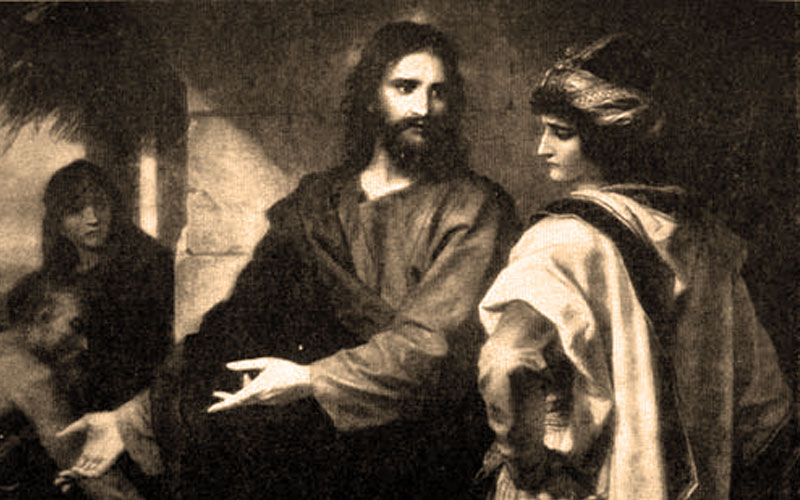
Jesus and the Rich Young Ruler

When we begin reading the account of the rich young ruler who came to Jesus (Matthew 19:16-22), we read of one who seemed to be a good man with a good attitude who showed a lot of promise in becoming a disciple of Christ. Notice the good qualities we are told about this man:

  1. He was spiritually minded – He was interested in eternal life and came to Jesus in order to find out how to obtain it (Matthew 19:16).
  2. He was religious – When Jesus listed some of the commandments that he needed to keep, the young man said, “All these things I have kept” (Matthew 19:20).
  3. He was interested in improving his service to God – After affirming that he had been keeping the commandments that Jesus mentioned, he asked, “What am I still lacking?” (Matthew 19:20).

Unfortunately, despite the promise that he showed initially, in the end he “went away grieving” (Matthew 19:22), presumably because he was unwilling to do what Jesus told him to do – sell his possessions, give to the poor, and follow Him (Matthew 19:21).

We need to be like the rich young ruler in the sense that we desire to grow and improve our service to God. However, unlike the rich young ruler, we must also be willing to do the work that is necessary to improve or fix what is lacking in our lives.

We might ask the same question as this man: “What am I still lacking?” Let us notice some things that might be lacking in our service to God so we can see the areas in which we may need to improve.
Continue Reading

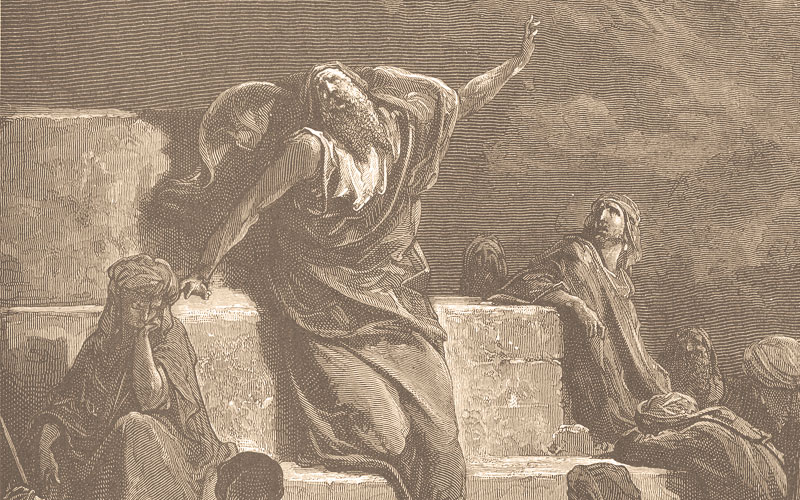
Jeremiah’s Commission

Jeremiah

Even before he was conceived, Jeremiah was specifically appointed by God as a prophet (Jeremiah 1:5). We may not be called to do the work of a prophet today (cf. 1 Corinthians 13:8-10), but we can still learn from the instructions which were given to Jeremiah. We are obligated to teach and defend the truth (1 Timothy 3:15; Philippians 1:16-17). Studying Jeremiah’s commission helps us to learn how to do this.

Then the Lord stretched out His hand and touched my mouth, and the Lord said to me, ‘Behold, I have put My words in your mouth. See, I have appointed you this day over the nations and over the kingdoms, to pluck up and to break down, to destroy and to overthrow, to build and to plant’” (Jeremiah 1:9-10).

There were six things that Jeremiah would do in his prophesying – (1) pluck up, (2) break down, (3) destroy, (4) overthrow, (5) build, and (6) plant. These are the same six things we must do in our teaching today.

Before we consider these six things, it is important to note that all of this would be accomplished with the words of God (Jeremiah 1:9). In the same way, we will accomplish these six things by speaking “as the oracles of God” (1 Peter 4:11, NKJV). We must not look to human wisdom, commandments, traditions, or opinions to accomplish our goals in teaching. Instead, we must look exclusively to the word of God.

So let us notice the six things we must do as we teach God’s word.
Continue Reading

What Do the Numbers Tell Us?

Chart

There is often a great deal of emphasis placed upon numbers in a congregation – membership, attendance, converts, etc. This is somewhat natural. We tend to want some way to gauge success or progress in our efforts. Yet numbers rarely tell the whole story and, in many ways, can even be deceiving. Rather than being quick to jump to conclusions based upon numbers, we should look to God’s word to gauge our success in carrying out His will.
Continue Reading

The Four C’s of Effective Preaching

Speaker

Any preacher who is diligently striving to “do the work of an evangelist” (2 Timothy 4:5) will want to carry out that work as effectively as possible. But how can one effectively preach the gospel of Christ? In this article, I would like to consider four points explaining how this is done. These points are not based upon personal experience, human wisdom, or any sort of formal religious training. Rather, these points are taken directly from the word of God. If one wishes to preach the word of God effectively, he must learn how the Scriptures indicate that this is done.
Continue Reading

What We Profess With Our Dress

Woman Standing in a Field

Likewise, I want women to adorn themselves with proper clothing, modestly and discreetly, not with braided hair and gold or pearls or costly garments, but rather by means of good works, as is proper for women making a claim to godliness” (1 Timothy 2:9-10).

Paul talked about women wearing clothing that is “proper for women making a claim to godliness.” The King James Version contains this phrase: “women professing godliness.” The point is that our clothing makes a statement. We should ask ourselves: Are we making the right statement with our clothing?

These verses are specifically directed toward women. There is a reason for this – women are much more likely to cause harm with their improper dress. It is not that men can dress however they want without any thought to “godliness.” The principles in this passage – as well as the others we will be considering in this article – apply to both men and women. In this article, we will notice some of the things that we should profess with our dress.
Continue Reading