How to Handle the Trials of Life

Stress

Everyone faces trouble in life. But for the Christian, it is important that we know how to handle the trials that we will encounter in a way that will please God.

The apostle Paul is an example of one who had many struggles in this life. His suffering was such that he told the brethren in Corinth, “I die daily” (1 Corinthians 15:31) and that he was “in danger every hour” (1 Corinthians 15:30). In his second letter to these brethren he spoke of the suffering he faced for the cause of Christ – labors, imprisonments, beatings, shipwrecks, and more (2 Corinthians 11:23-29). When he wrote to the brethren in Philippi, he mentioned that there were times in which he was “going hungry” and “suffering need” (Philippians 4:12).

How was Paul able to handle all of this? He told the Philippians, “I can do all things through Him who strengthens me” (Philippians 4:13).

As we face trials in this life, we can handle them as Paul did – through Christ. But what exactly does this mean? In practical terms, what must we do to overcome these hardships? What does God provide to aid us in our efforts? What attitude must we have to be successful in dealing with the trials of life? To answer these questions, we must look to the word of God.
Continue Reading


What All Men Have in Common

Handshake

People are different. Sadly, there are some who unfairly judge or even hate others simply because they are of a different race, culture, economic class, etc. Christians are to “judge with righteous judgment” (John 7:24) and “abound in love for one another, and for all people” (1 Thessalonians 3:12). In order to do this, we need to remember what all men have in common rather than focus too much on certain differences that may exist.

In this article, we will consider seven things which all of us have in common.
Continue Reading

Faith on Man’s Terms

The Scriptures are clear in describing faith as essential. The Hebrew writer said, “And without faith it is impossible to please Him” (Hebrews 11:6). Yet too many have a conditional faith. In other words, even though the Bible tells us that faith is based upon the word of God (Romans 10:17), this is not enough for some people. They will not believe unless they see, receive, or otherwise experience something beyond the revealed will of God.

This is nothing new. Even during the first century, there were those who would only have faith on their terms, rather than have faith based upon what God had chosen to reveal to them. In this article we will notice a few of these conditions that men have placed upon their faith. At the end, we will also see what genuine faith looks like.
Continue Reading

“Do Not Let Your Heart Envy Sinners”

Bar

Christians are not to be envious of anyone since “envying” is a work of the flesh (Galatians 5:19-21). Yet it is particularly important that we not envy those who live their lives in such a way that is contrary to the will of God. Solomon gave a clear warning: “Do not let your heart envy sinners, but live in the fear of the Lord always” (Proverbs 23:17).

Why did Solomon have to explicitly state that God’s people were not to be envious of those who were not of His people? Sadly it is because it is common for the righteous to envy the unrighteous. Notice the words of the psalmist: “For I was envious of the arrogant as I saw the prosperity of the wicked” (Psalm 73:3).
Continue Reading

“The Poor Have the Gospel Preached to Them”

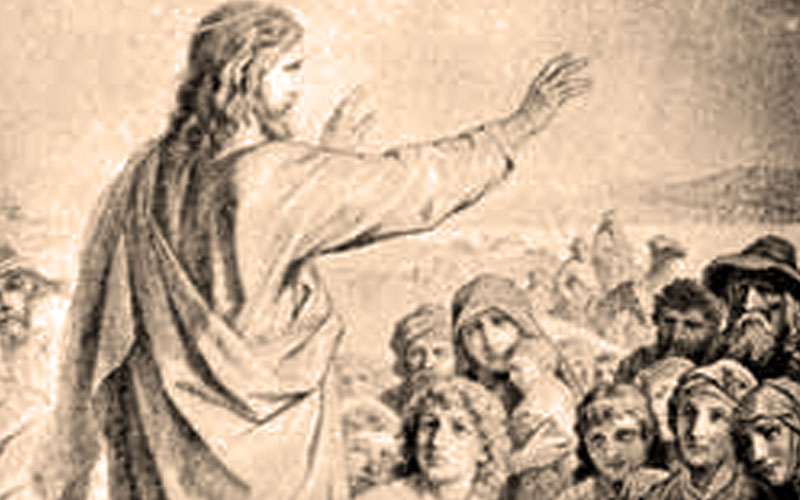
Jesus teaching

The common perception by people – from within the religious world and outside of it – is that churches are charitable organizations designed to help the poor. Denominational churches spend much time, energy, and money helping the poor. Those who are in need (or claim to be in need) often visit churches seeking a handout.

We are certainly to be concerned for the poor (Galatians 2:10; Ephesians 4:28; James 2:15-17) and, as we have opportunity (Galatians 6:10), help those with legitimate needs (cf. 2 Thessalonians 3:10 – “If anyone is not willing to work, then he is not to eat, either”). Yet the Lord’s church is not a charity. He did not design or ordain it to be one. Instead, He designed and ordained the church for another purpose that is far more important than mere benevolence.

When John sent some of his disciples to find evidence that Jesus was the promised Messiah (Matthew 11:2-3), one of the proofs that Jesus cited was that “the poor have the gospel preached to them” (Matthew 11:5). Jesus did not mention feeding the poor, clothing them, or giving them money. Instead, the proof offered to John’s disciples for Jesus’ identity was the fact that the poor were taught the good news of salvation.
Continue Reading

The Mission of the Church

Church building

There are many different churches all over the world. Why do these churches exist? What is their mission? That answer will vary from church to church as men fashion their churches according to their own desires. We will consider a few possible answers later in this article.

But what is the mission of the church of our Lord? The answer to this question will not be found in human opinion or tradition, but in the word of God that has been revealed to us in the Scriptures. So let us see what the Scriptures say about the mission of the church.
Continue Reading

Trading Liberty for Security

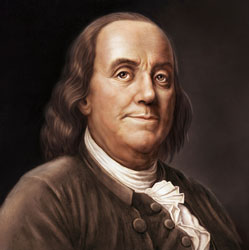
Benjamin FranklinBenjamin Franklin famously said, “They who can give up essential liberty to obtain a little temporary safety, deserve neither liberty nor safety.” A common variation of this quote is, “People willing to trade their freedom for temporary security deserve neither and will lose both.” Though the founding father and those who use this quote today are referring to matters relating to civil government, there is a spiritual truth contained in the statement. How this principle applies to our spiritual lives is of far greater importance than how it applies to the power of human government. So let us consider the spiritual implications of this principle.


Continue Reading