Who Calls You a Christian?

Thinking young man

If you were on trial for being a Christian, would there be enough evidence to convict you? That question, or a variation of it, has been asked many times in order to remind us all of the importance of letting our lights shine (Matthew 5:16), being ready to give an answer (1 Peter 3:15), and defending the truth (Philippians 1:16-17). We need to live in such a way that others can see Christ living in us (Galatians 2:20).

However, while the question raised in the first paragraph is good, there is another point that is just as important for us to consider. Just because the world sees you as a Christian, that does not necessarily mean that God sees you that way, too. To illustrate this point, notice what Paul said about the adulteress in his letter to the Romans:
Continue Reading
Testing God

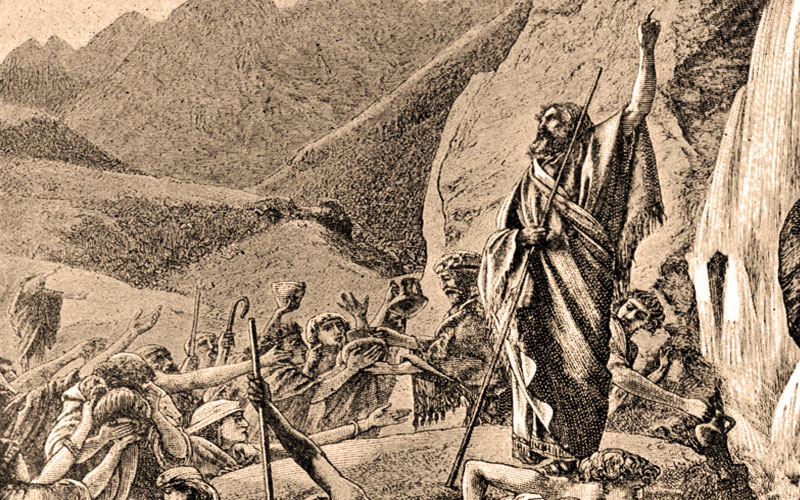
Moses Strikes the Rock

The Hebrew writer quoted the psalmist’s description of the Israelites testing God in the wilderness (Hebrews 3:7-11; cf. Psalm 95:7-11). Testing God is directly connected to one’s faith. Immediately after mentioning the Israelites testing God, the Hebrew writer warned about the danger of “an evil, unbelieving heart that falls away from the living God” (Hebrews 3:12). He closed the chapter with a statement about the “unbelief” exhibited by those who tested God (Hebrews 3:19).

In this article, we will briefly consider three examples given in Scripture that show how one can be guilty of testing God. After noting these examples, we will also consider the severe consequences of testing God so we might learn not to do this ourselves.
Continue Reading

Why Does the Earth Still Stand?

View of Earth from space

At the close of his second epistle, Peter told those to whom he wrote about the end of the world: “But the day of the Lord will come like a thief, in which the heavens will pass away with a roar and the elements will be destroyed with intense heat, and the earth and its works will be burned up” (2 Peter 3:10).

Because this day was coming “like a thief,” he wanted them to be prepared: “Since all these things are to be destroyed in this way, what sort of people ought you to be in holy conduct and godliness, looking for and hastening the coming of the day of God” (2 Peter 3:11-12). “Therefore, beloved, since you look for these things, be diligent to be found by Him in peace, spotless and blameless” (2 Peter 3:14). He wanted them to be living in a state of readiness knowing that the Lord could return at any time.

Approximately two thousand years later, the earth is still here. Why? It is important to understand that Peter’s words were not meant to suggest imminence (the end was soon), but unexpectedness (the end could come at any time). With this in mind, the Scriptures give three reasons why the earth has not yet been destroyed.
Continue Reading

Tent-Making Preachers

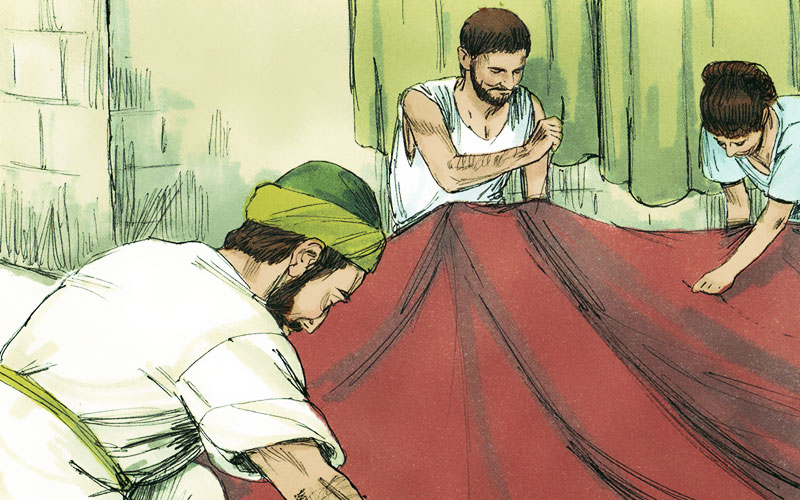
Paul Making Tents

God’s design is that those who dedicate their lives to preaching the gospel receive full support for that work. Paul told the church in Corinth, “So also the Lord directed those who proclaim the gospel to get their living from the gospel” (1 Corinthians 9:14).

However, one who preaches may not always (or ever) enjoy the blessing of such support. Perhaps the brethren cannot financially support a preacher. It could be that brethren could support a preacher, but will not because they do not value the work of preaching as highly as they should. Or, as in the case of Paul, a preacher may forgo receiving support because circumstances are such that it may actually hinder the cause of the gospel (1 Corinthians 9:12).

When a preacher receives only partial support – or even no support – for preaching the gospel, what is he to do?
Continue Reading

Seated at the Right Hand of God

At the beginning of the book of Hebrews, the writer began by reminding the brethren that Jesus was God’s spokesman for “these last days” (Hebrews 1:2). He then explained how Jesus was qualified for this position:

And He is the radiance of His glory and the exact representation of His nature, and upholds all things by the word of His power. When He had made purification for sins, He sat down at the right hand of the Majesty on high” (Hebrews 1:3).

In this short article, I want to focus on part of this description of Christ. So for a few moments, I invite you to consider with me the last part of this verse: “When He had made purification for sins, He sat down at the right hand of the Majesty on high.” If we understand this phrase, we will have a fundamental understanding of the gospel of Christ and why His new law is superior to the Law of Moses.
Continue Reading

Why Were They Prophets of Baal?

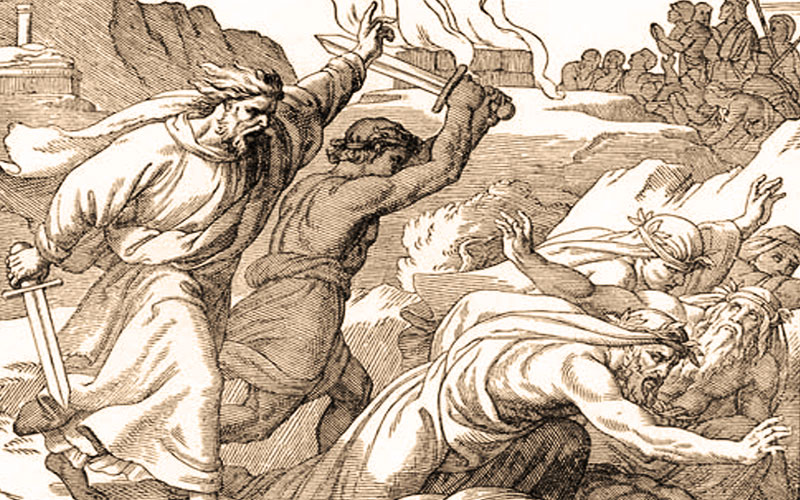
Elijah and the Prophets of Baal

1 Kings 18 records the familiar story of the contest between Elijah and the prophets of Baal on Mount Carmel. I will not take time in this brief article to review the account. If you are unfamiliar with it, I encourage you to read of the event in 1 Kings 18:17-40.

When we consider this contest, we often focus on Elijah with his great example of faith and willingness to stand alone for God with 450 prophets of Baal opposing him. We also sometimes consider the people’s unwillingness to commit to following either God or Baal. But in this article, I want us to consider the prophets of Baal themselves and ask the question: Why were they prophets of Baal?
Continue Reading

The Separation of Church and State

Church and American Flag

There is an ongoing debate in our society about the “separation of church and state.” Though the phrase is not used in any of this country’s founding documents, many understand it to be a fundamental principle upon which this nation was built. However, the debate springs from the differences people have in interpreting this phrase. As Christians, our concern should not be which position is the “conservative” or “liberal” position. Our concern should be what the Scriptures teach. So in this article, we will examine what the word of God says on this topic.
Continue Reading