Soldiers of the Victorious Lamb

It is an inescapable reality that we are involved in a war – not the type of war that nations wage for wealth, resources, or territory; but a spiritual war for the souls of men (2 Corinthians 10:3-5). While the final outcome of a physical war is always unknown, the result of this spiritual war is certain. Notice what the book of Revelation says about the victory of Christ:

These will wage war against the Lamb, and the Lamb will overcome them, because He is Lord of lords and King of kings, and those who are with Him are the called and chosen and faithful” (Revelation 17:14).

Jesus will lead His army to victory. There is no uncertainty to this. What is uncertain is which side we will join. Will we choose to be on the Lord’s side? Or will we choose to fight against Him?
Continue Reading


Thoughts on the New Year

Happy New Year

As the beginning of another year rapidly approaches, Christians can use this time in three ways: as a reminder, as an opportunity, and as a warning.
Continue Reading

“Greater Love Has No One Than This”

I Love Jesus

Shortly before His death, Jesus spoke to His disciples about love – the love He had for them and the love they were to have for Him.

Greater love has no one than this, that one lay down his life for his friends. You are My friends if you do what I command you” (John 15:13-14).

Continue Reading

After the Flood

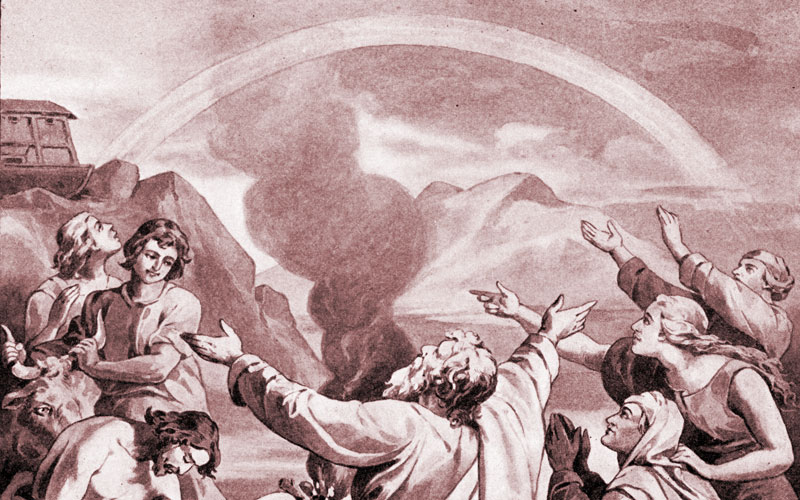
Noah and the Rainbow

Children grow up learning about Noah and the ark. As adults, we study the record of the flood and strive to learn the lessons it teaches – why it happened, how Noah was saved, Noah’s example of obedience, as so on. But there are also important lessons for us that came immediately after the flood. We will notice a few in this article.Continue Reading

Sounding Forth the Word

Tin can phone

The local church is God’s “missionary society” – the organization through which we work to spread the gospel. Though man has concocted many different schemes and systems since the time when Jesus established His church, the Lord’s design is for His message to be proclaimed through the work of individuals and local churches. Paul mentioned the church in Thessalonica as an example of how this simple arrangement can be successful.

For the word of the Lord has sounded forth from you, not only in Macedonia and Achaia, but also in every place your faith toward God has gone forth, so that we have no need to say anything” (1 Thessalonians 1:8).

Continue Reading

“What Prevents Me From Being Baptized?”

Standing by the Water

After leaving Samaria, Philip met a eunuch from Ethiopia traveling home from Jerusalem and reading from the prophet Isaiah (Acts 8:26-33). This man wanted to understand what he was reading so he asked Philip, “Please tell me, of whom does the prophet say this? Of himself or of someone else?” (Acts 8:34). At this point, “Philip opened his mouth, and beginning from this Scripture he preached Jesus to him” (Acts 8:35).

Every conversion, whether recorded in the New Testament or those that occur today, will begin with this. The story of Jesus is the heart of the gospel message (1 Corinthians 15:3-4). Jesus is the cornerstone of the foundation upon which we are built (Ephesians 2:19-21). Jesus is “the way, and the truth, and the life” (John 14:6). So Philip preached Jesus, just as we must do today.

The text implies the inclusion of baptism in Philip’s teaching about Jesus. The first thing we see after Luke recorded Philip preaching Jesus is this: “As they went along the road they came to some water; and the eunuch said, ‘Look! Water! What prevents me from being baptized?’” (Acts 8:36). This would be an odd question if Philip had not already been discussing baptism with the eunuch.
Continue Reading

Roadblocks on the Way to Adultery

Roadblock

The sin of adultery is explicitly condemned in Scripture. It was prohibited in the Ten Commandments (Exodus 20:14) which God gave as a foundation for the rest of the laws given to the nation of Israel. In the New Testament, Paul listed adulterers as those who “will not inherit the kingdom of God” (1 Corinthians 6:9). The Hebrew writer said that adulterers will be judged by God (Hebrews 13:4). In fact, Jesus gave fornication (which is adultery when committed by a married person) as the only cause that gave one divine permission to put away his spouse (Matthew 19:9).

Not only does God specifically condemn adultery, but society generally looks down upon it as well. The wise man said, “Men do not despise a thief if he steals to satisfy himself when he is hungry; but when he is found, he must repay sevenfold; he must give all the substance of his house. The one who commits adultery with a woman is lacking sense; he who would destroy himself does it. Wounds and disgrace he will find, and his reproach will not be blotted out. For jealousy enrages a man, and he will not spare in the day of vengeance” (Proverbs 6:30-34). This passage does not justify stealing while condemning adultery – both were condemned (Exodus 20:14-15). But the wise man’s point was that man tends to be sympathetic toward one who steals solely out of hunger. For the adulterer, there is no excuse in the eyes of man – particularly with the husband of the wife who participated in the affair. Instead, the adulterer becomes a target for wounds, disgrace, and vengeance.

Despite the fact that there are many deterrents to adultery, this sin remains prevalent. Why is that? I believe we can begin to see why as we examine the warnings about the adulteress (Proverbs 7). As she was described in that chapter, we read of her doing everything she could to remove the roadblocks that stood between a man and the sin of adultery. She wanted to portray the sin as not only pleasurable, but also convenient and without consequence. Let us notice some of the roadblocks – those things which help deter us from committing adultery – and see how the adulteress strives to take those roadblocks out of the way.
Continue Reading