The Rise and Fall of Public Opinion

Graph

Anyone who follows politics and elections has seen dramatic shifts in public opinion. One week a candidate may be at the top of the polls. The next week he starts to fall. Then the week after he is at the bottom of the field. This is just one common example of how quickly the public can go from having a favorable opinion of a person, product, or position to having an unfavorable opinion. When we study the gospel of John, we also see this type of shift in the public’s opinion of Jesus.
Continue Reading

Saved by Baptism Alone?

Baptism

The concept of salvation by faith alone is quite popular. Many have been deceived into thinking that all God requires of man is a simple mental affirmation of Jesus being the Savior. As long as one believes this, then he will be saved.

There are several passages that brethren use to refute the concept of salvation by faith alone. The clearest was written by James: “You see that a man is justified by works and not by faith alone” (James 2:24). If you get out your concordance and search for this phrase, you will find that this verse is the only one that says anything about “faith alone,” and it denies that we are saved on this basis.

The truth is that our salvation is attributed to many things – God’s grace (Ephesians 2:8), mercy (Titus 3:5), and love (John 3:16); the blood, death, and life of Christ (Romans 5:9-10); the gospel (Romans 1:16); our faith (John 8:24), repentance (Luke 13:3,5), confession (Romans 10:9-10), baptism (Mark 16:16), obedience (Hebrews 5:9), and more*. To claim that we are saved by faith alone is simply not compatible with Scripture.

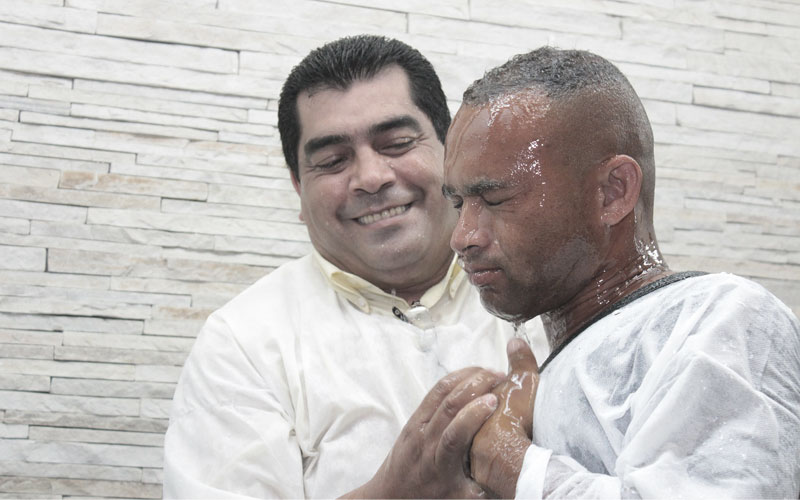
One item in the list above that is vehemently attacked by sectarians is baptism. Despite the fact that Peter said, “Baptism now saves you” (1 Peter 3:21), many will adamantly deny that baptism is necessary for salvation. In light of this, truth teachers will often spend a good deal of time explaining the vital role of baptism in our salvation.
Continue Reading

What Makes One a False Teacher?

Error

The existence of false teachers is a sad reality. Just as there were false prophets in the past, Peter said, “There will also be false teachers among you” (2 Peter 2:1). Our responsibility is to mark and turn away from them (Romans 16:17), have no fellowship with them (2 John 10-11), and refute their error (Titus 1:9; 2 Corinthians 10:5).

But what is it that makes one a false teacher? The seemingly obvious answer to this question – teaching what is false – is disputed by many. The argument is made that teaching what is wrong does not necessarily make one a false teacher; rather, one would be a false teacher based on evil intentions and deliberate attempts to deceive.

So, is one a false teacher based on his message or his motive? Let us notice a few passages to help answer this question.
Continue Reading

The Honest and Good Heart

Wheat

In the previous article we looked at the parable of the sower, noting the four different soils which represented four different types of hearts. Each one responded differently to the word when it was sown among them. Despite these differences, we saw that the message (the seed, the word of God) was not changed. Rather than trying to change the message, we should strive to develop the “honest and good heart” (Luke 8:15) that Jesus said would be receptive to His saving gospel.

Jesus explained the illustration of the good soil: “But the seed in the good soil, these are the ones who have heard the word in an honest and good heart, and hold it fast, and bear fruit with perseverance” (Luke 8:15). Let us be reminded of what the honest and good heart will do and how we can develop this type of heart.
Continue Reading

The Seed of the Sower

The Sower

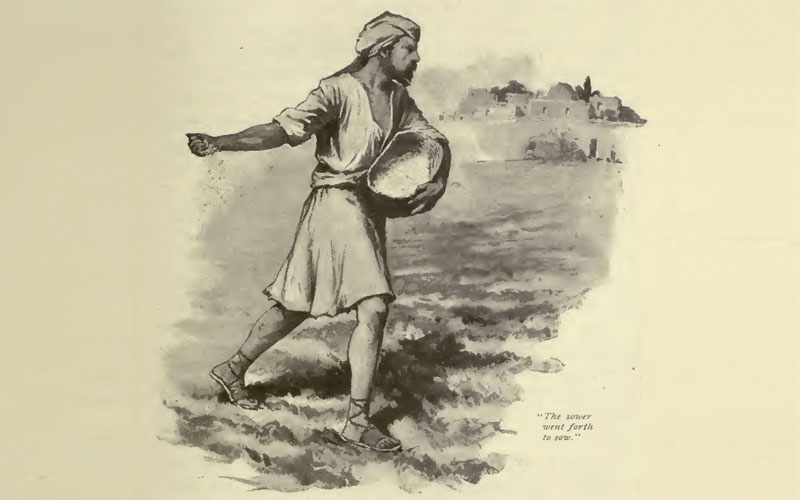
The parable of the sower is one of the more familiar parables spoken by Jesus. In it, He taught an important lesson about the type of message that is required in order to produce fruit.
Continue Reading

How God Is Able to Establish You

Bible

As Paul concluded his epistle to the Romans, he praised God for His ability to establish them (Romans 16:25-27). This means He was able to make them strong, complete, and equipped to follow Him and to face the trials that exist in this life. Is God able to establish us today? If so, how?

Earlier in this letter, Paul expressed a desire to come to them in Rome: “For I long to see you so that I may impart some spiritual gift to you, that you may be established” (Romans 1:11). What were these spiritual gifts that Paul would impart to them in order to establish them? These miraculous gifts of the Spirit are enumerated in the first letter to Corinth and included such gifts as knowledge, prophecy, and the ability to speak in tongues (1 Corinthians 12:7-11). Do we need to have some miraculous spiritual gift in order to be established today? If so, we are in trouble because Paul later said that such miraculous spiritual gifts would be “done away” and replaced with the completed revelation in the word of God (1 Corinthians 13:8-10). This is what we need in order to be established today – the word of God. In our text, Paul described the word in several different ways, showing how it is able to establish us.
Continue Reading

Preaching and Writing

Bible and Notebook

While I was in high school, I made the decision that when I grew up I wanted to be a gospel preacher. So at that point, I began writing religious articles. I did not care for writing in school and was never a gifted writer, so I needed to start practicing and improving my skills. I saw writing as an inherent part of the work of a preacher, as this would provide another avenue through which to spread the gospel message. So since I decided I was going to preach, I decided I also needed to write.

Nearly fifteen years later, it appears to me that preachers in general do not do as much writing as I thought they would. Dedicating time regularly to writing seems to be the exception rather than the rule. Maybe this has always been the case and my youthful naiveté led me to wrongly assume that writing was common for preachers. Perhaps more preachers are writing than the relative few of which I am aware. Or it could be that writing by gospel preachers has decreased in the last decade or so. Regardless of which one is closest to reality, I want to deal with some reasons why writing is a valuable endeavor for preachers and should not be quickly dismissed.
Continue Reading