Reporting Back to Antioch

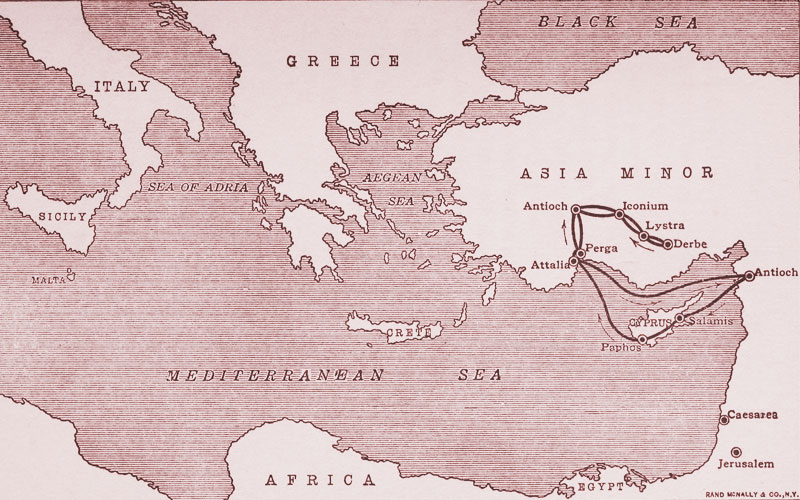
Paul's First Missionary Journey

Following the preaching trip that took them through such places as Iconium, Lystra, and Derbe, Paul and Barnabas returned to Antioch. Luke wrote, “When they had arrived and gathered the church together, they began to report all things that God had done with them and how He had opened a door of faith to the Gentiles” (Acts 14:27).

It is important to notice what happened here, particularly today as churches may support preachers who work in other locations. The church in Antioch “sent” Paul and Barnabas on this trip to preach the gospel in various places (Acts 13:3). That sending does not imply a command for them to go – that was given by the Holy Spirit (Acts 13:2, 4). Instead, the implication is that the church supported (financially) these men in their work.

When Paul and Barnabas returned to Antioch, they did not just meet with the elders of the church or with a few other individuals. The account of their work did not take place during a common meal or other casual setting. Rather, they “gathered the church together.” This shows us that it is perfectly acceptable for a congregation to invite a preacher to come and give a report on the work that they helped to support. More than this, we can be reminded of the benefits of such reports.
Continue Reading
“I Will Build My Church”

Matthew 16:18

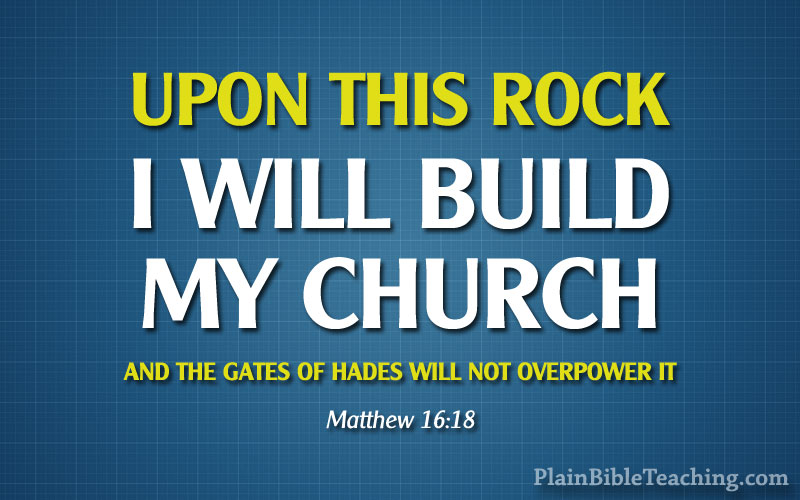
Simon Peter answered, ‘You are the Christ, the Son of the living God.’ And Jesus said to him, ‘Blessed are you, Simon Barjona, because flesh and blood did not reveal this to you, but My Father who is in heaven. I also say to you that you are Peter, and upon this rock I will build my church; and the gates of Hades will not overpower it’” (Matthew 16:16-18).

One of the more significant statements in the revelation of God’s plan was Jesus’ promise to His apostles, “I will build My church” (Matthew 16:18). Let us break down this statement and see what Jesus is teaching here.
Continue Reading

Placing Membership with a Local Church

Saul at Jerusalem

The New Testament stresses the importance of Christians being part of a local congregation. But how does one join or place membership with a local church? At what point does one become a part of a congregation of God’s people? If we look at Saul’s effort to join the church in Jerusalem, we will see that there are two steps necessary for one to place membership with a local church.
Continue Reading

What Happened After Saul’s Conversion?

Saul escaping Damascus in a basket

We often talk about the conversion of Saul – later known as the apostle Paul – because of the important lessons to be found in it about how one becomes a Christian. But what about what happened after Saul’s conversion? There are important lessons here as well. Let us look at what Saul did following his conversion.
Continue Reading

Christians Are To Be Radical, Liberal, and Institutional

Young man thinking

Should we be able to describe faithful Christians as radical, liberal, or institutional? If you have followed the writing and teaching that I have done, you will probably expect me to answer this question in the negative. After all, we are to be conservative and non-institutional, right?

When we use labels such as these, we generally use them in regard to certain erroneous positions, issues, and movements. Yet when we change the context, we can make the case from the Bible that, in certain ways, Christians are to be radical, liberal, and institutional. So let us consider some other ways we can use these terms.
Continue Reading

Taking Stock

Meditation

As another year is quickly drawing to a close, we often use this time to take stock of our lives. We look back at where we have been and evaluate where we are now. We also tend to look forward to the new year and what might lie ahead, thinking about what we ought to do in order to get to where we want to be.

It is certainly a good exercise for us to consider where we are in contrast to where we have been and where we are going. While we are doing this, let us not forget our spiritual lives. It would be good for us to be taking stock of where we have been, where we are, and where we are headed.
Continue Reading

Keywords in the Prophecy of the Coming Kingdom

Matterhorn mountain

Isaiah prophesied of a kingdom that was to come “in the last days” – the age that was ushered in following the coming of Christ into the world (cf. Hebrews 1:2). There are several keywords in this prophecy that we must understand if we are to appreciate what the passage teaches.

Now it will come about that in the last days the mountain of the house of the Lord will be established as the chief of the mountains, and will be raised above the hills; and all nations will stream to it.

And many peoples will come and say, ‘Come, let us go up to the mountain of the Lord, to the house of the God of Jacob; that He may teach us concerning His ways and that we may walk in His paths.’ For the law will go forth from Zion and the word of the Lord from Jerusalem.

And He will judge between the nations, and will render decisions for many peoples; and they will hammer their swords into plowshares and their spears into pruning hooks. Nation will not lift up sword against nation, and never again will they learn war” (Isaiah 2:2-4).

Let us briefly consider each of these key terms:
Continue Reading