Stand Firm in the True Grace of God

Standing and looking at the sunset

Grace is a misunderstood topic among many in the religious world. People believe we are saved by grace alone and that works (especially baptism) are not necessary for salvation. There are also those who believe that grace gives them permission to sin without fear of punishment.

As Peter summarized his first epistle, he said this: “I have written to you briefly, exhorting and testifying that this is the true grace of God. Stand firm in it!” (1 Peter 5:12). What is the true grace of God? Is it the kind of grace that is described by the majority of those in the religious world, or is it something different? A study of Peter’s first epistle – which he said is “the true grace of God” – will help us get a better understanding of grace and what is related to it. Let us notice some of the things that Peter, by inspiration of the Holy Spirit (John 16:13), included in this category.
Continue Reading


"Go and Cry Out to the Gods Which You Have Chosen" (4/3)

Thought from today’s Bible reading from Judges 10-12.

Following their regular pattern, the Israelites fell away and “did evil in the sight of the Lord” (Judges 10:6). To punish them, God “sold them into the hands of the Philistines and into the hands of the sons of Ammon. They afflicted and crushed the sons of Israel that year” (Judges 10:7-8). Then, as they typically did, the sons of Israel cried to God for help.

Then the sons of Israel cried out to the Lord, saying, ‘We have sinned against You, for indeed, we have forsaken our God and served the Baals.’ The Lord said to the sons of Israel, ‘Did I not deliver you from the Egyptians, the Amorites, the sons of Ammon, and the Philistines? Also when the Sidonians, the Amalekites and the Maonites oppressed you, you cried out to Me, and I delivered you from their hands. Yet you have forsaken Me and served other gods; therefore I will no longer deliver you. Go and cry out to the gods which you have chosen; let them deliver you in the time of your distress’” (Judges 10:10-14).

Time and time again, God proved His love for the sons of Israel in delivering them despite their disobedience. But they thought of God’s grace as a reason to tolerate sin, just as many do today (Romans 6:1-2).
Continue Reading

By the Grace of God

Paul

In presenting evidence to support the resurrection of Christ, Paul told the brethren in Corinth of several eyewitnesses who could verify that Jesus did in fact rise from the dead. The last of these eyewitnesses that Paul mentioned was himself: “And last of all, as to one untimely born, He appeared to me also” (1 Corinthians 15:8).

At this point, Paul took a short break from his discussion about the historicity of Jesus’ resurrection to make a point about the grace of God:

For I am the least of the apostles, and not fit to be called an apostle, because I persecuted the church of God. But by the grace of God I am what I am, and His grace toward me did not prove in vain; but I labored even more than all of them, yet not I, but the grace of God with me. Whether then it was I or they, so we preach and so you believed” (1 Corinthians 15:9-11).

Paul made four points in these three verses about the grace of God. Let us consider these briefly.
Continue Reading

Unworthy of God’s Lovingkindness (1/23)

Thought from today’s Bible reading from Genesis 32-34.

When Jacob departed from Laban and traveled toward his home country, he was fearful of the prospect of meeting his brother Esau. This was certainly understandable since Esau was seeking to kill him when he left (Genesis 27:41-43). When he heard that Esau was coming to meet him with four hundred men (Genesis 32:6), Jacob prayed to God.

O God of my father Abraham and God of my father Isaac, O Lord, who said to me, ‘Return to your country and to your relatives, and I will prosper you,’ I am unworthy of all the lovingkindness and of all the faithfulness which You have shown to Your servant; for with my staff only I crossed this Jordan, and now I have become two companies. Deliver me, I pray, from the hand of my brother, from the hand of Esau; for I fear him, that he will come and attack me and the mothers with the children” (Genesis 32:9-11).

Continue Reading

Taking Stock

Meditation

As another year is quickly drawing to a close, we often use this time to take stock of our lives. We look back at where we have been and evaluate where we are now. We also tend to look forward to the new year and what might lie ahead, thinking about what we ought to do in order to get to where we want to be.

It is certainly a good exercise for us to consider where we are in contrast to where we have been and where we are going. While we are doing this, let us not forget our spiritual lives. It would be good for us to be taking stock of where we have been, where we are, and where we are headed.
Continue Reading

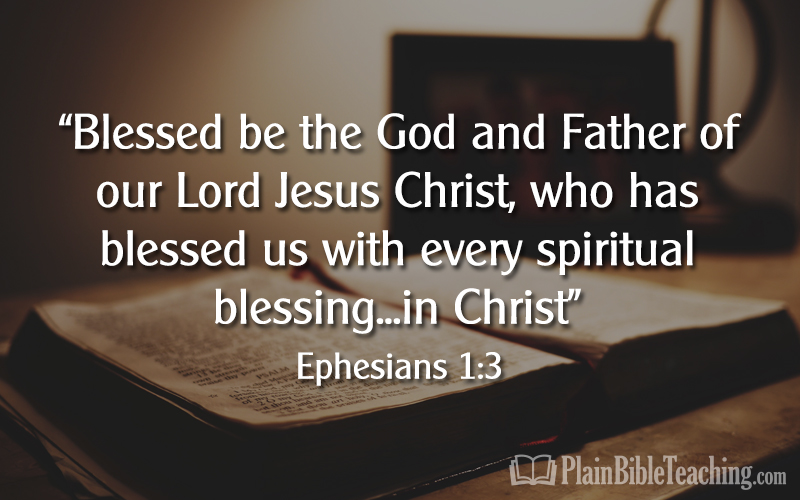
All Spiritual Blessings in Christ

Ephesians 1:3

Paul began his letter to the Ephesians by offering praise to God: “Blessed be the God and Father of our Lord Jesus Christ” (Ephesians 1:3). There are many reasons why God is worthy of all praise and honor; but in this passage, Paul directed our attention to the spiritual blessings we have from Him. We give glory to God because he has “blessed us with every spiritual blessing in the heavenly places in Christ” (Ephesians 1:3).

As Paul continued, he listed some of the spiritual blessings available to us:
Continue Reading

Noah Found Favor in the Eyes of the Lord

Rainbow

In Genesis 3, we read about sin being introduced into the world. Just three chapters later, the sins of man had progressed and compounded to such a point that “the wickedness of man was great on the earth, and that every intent of the thoughts of his heart was only evil continually” (Genesis 6:5). It is because of this great wickedness that God decided to destroy mankind (Genesis 6:6-7).

In the next chapter, God sent a flood which destroyed nearly all of mankind (Genesis 7:23). But Noah and his household were spared. “Noah found favor in the eyes of the Lord” (Genesis 6:8). We read a few things about Noah before, during, and after the events of the flood that show how he was different from the others who perished and why he found favor with God and was saved.
Continue Reading