The Shepherd and the Sheep

Shepherd

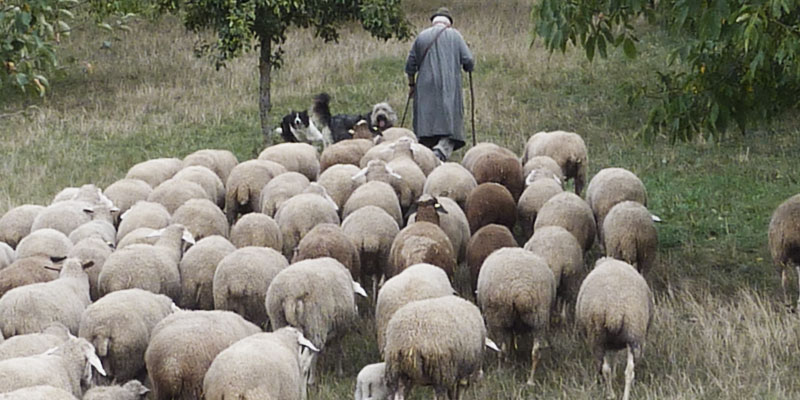
Jesus described Himself as “the good shepherd [who] lays down His life for the sheep” (John 10:11). A shepherd provides guidance, sustenance, and protection for the flock. No one is able to provide the same care for us as Jesus. He willingly sacrificed Himself for us (John 10:17-18). Therefore, it is vitally important that we have Christ as our shepherd.

How do we become one of His sheep? And how do we remain in His fold? Notice what Jesus said:

My sheep hear My voice, and I know them, and they follow Me” (John 10:27).

Let us briefly examine this phrase to see how we can take advantage of the care provided by the Good Shepherd.
Continue Reading

Lessons on Wisdom from the Life of Solomon

Solomon - old age

Many books have been written in which the author claims to be imparting some wisdom to his readers. What makes the book of Proverbs different is the author and the source of his wisdom.

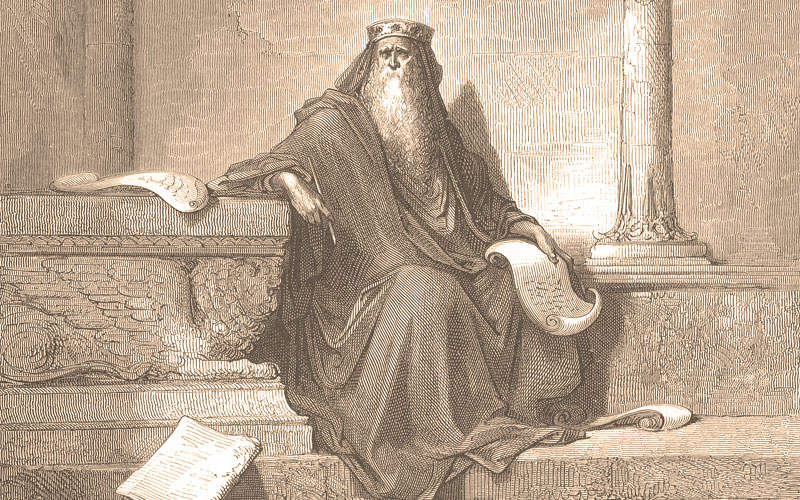
The last two chapters of Proverbs are attributed to “Agur the son of Jakeh, the oracle” (30:1) and “King Lemuel, the oracle which his mother taught him” (31:1). The identities of these individuals are uncertain. However, the bulk of Proverbs can be attributed to “Solomon, the son of David, king of Israel” (1:1). Some of these “proverbs of Solomon” were “transcribed” by “the men of Hezekiah, king of Judah” (25:1).

It is important that we understand how Solomon acquired his wisdom. We find the answer to this shortly after Solomon established his rule as king over Israel.
Continue Reading

Christ Is the End of the Law

Crucifixion

As the gospel was being preached in the first century, many of the Jews wanted to hold onto the Law of Moses. This was done in two ways. Some rejected the gospel outright, choosing to continue following the old law and refusing to follow Christ (Acts 4:10-11; Romans 9:33-10:4). Others tried to bring the Law of Moses – or parts of it – into the gospel, thus distorting the gospel of Christ (Galatians 1:6-7; 2:4-5). In either case, the result was condemnation (Romans 11:22; Galatians 1:8-9).

Despite the fact that the Jews – in large part – rejected the gospel, Paul’s prayer was that they might be saved (Romans 10:1). But in order to be saved, they needed to understand Christ and His relationship to the Law of Moses.

For Christ is the end of the law for righteousness to everyone who believes” (Romans 10:4).

Jesus came for the purpose of being “the end of the law.” What does this mean? Many of the Jews did not understand this and, as a result, were not saved through the gospel. In this article, we will notice what it means for Christ to be “the end of the law.
Continue Reading

How Long Will You Hesitate Between Two Opinions?

Fork in the Road

Just before Elijah’s confrontation with the prophets of Baal on Mount Carmel, he issued a challenge to the people of Israel who had gathered to witness the event.

Elijah came near to all the people and said, ‘How long will you hesitate between two opinions? If the Lord is God, follow Him; but if Baal, follow him.’ But the people did not answer him a word” (1 Kings 18:21).

The people were presented with a choice between two options – follow God or follow Baal. Similarly, we have choices to make about our personal conduct and religion. Many people like to think that they have a multitude of options from which to choose. But when you break down every decision, there are really just two options – follow God or not.
Continue Reading

Presuming to Know the Mind of God

Man Under Rainbow

In writing to the church at Corinth, Paul described the unfolding of God’s scheme of redemption as the revelation of a mystery that was previously hidden.

For to us God revealed them through the Spirit; for the Spirit searches all things, even the depths of God. For who among men knows the thoughts of a man except the spirit of the man which is in him? Even so the thoughts of God no one knows except the Spirit of God. Now we have received, not the spirit of the world, but the Spirit who is from God, so that we may know the things freely given to us by God” (1 Corinthians 2:10-12).

Paul explained that the only way for man to know the mind of God is for the Holy Spirit to reveal it. Today, that revelation is found in the Scriptures (2 Timothy 3:16). It is not only erroneous but also dangerous to the fate of our eternal souls to go beyond the Scriptures and presume to know the mind of God. Let us notice how we may, if we are not careful, be guilty of this.
Continue Reading

The Importance of Faith

FaithThe Scriptures tell us that “faith is the assurance of things hoped for, the conviction of things not seen” (Hebrews 11:1). Faith is the trust in God as the “rewarder of those who seek Him” (Hebrews 11:6). Faith is the determination to obey the Lord (Romans 1:5; 16:26). Faith does not come by God miraculously giving it to us through some direct, divine action. Rather, “faith comes from hearing, and hearing by the word of Christ” (Romans 10:17).



We might understand from the above passages what faith is, what faith does, and what the source of faith is; but why does this matter? What is the point of believing God, trusting God, and obeying His word? Why is faith important?Continue Reading

“We Are Unworthy Slaves”

Luke 17:10

Much of the denominational world is under the heavy influence of Calvinism. As a result, many people believe the false concepts of unconditional election and irresistible grace. Because of this, they object to the teaching that obedience is necessary for salvation – even though this is what the Bible teaches (cf. Hebrews 5:9; James 2:24). They argue that if one believes that salvation is conditioned upon obedience, then that one must believe he can “earn” his salvation. Yet this is not the case. Notice what Jesus said in the following passage:

Which of you, having a slave plowing or tending sheep, will say to him when he has come in from the field, ‘Come immediately and sit down to eat’? But will he not say to him, ‘Prepare something for me to eat, and properly clothe yourself and serve me while I eat and drink; and afterward you may eat and drink’? He does not thank the slave because he did the things which were commanded, does he? So you too, when you do all the things which are commanded you, say, ‘We are unworthy slaves; we have done only that which we ought to have done’” (Luke 17:7-10).

Jesus’ words in this passage are helpful in showing us the connection between grace and obedience. So let us briefly examine this passage.
Continue Reading