
The Thoughts of God and Man

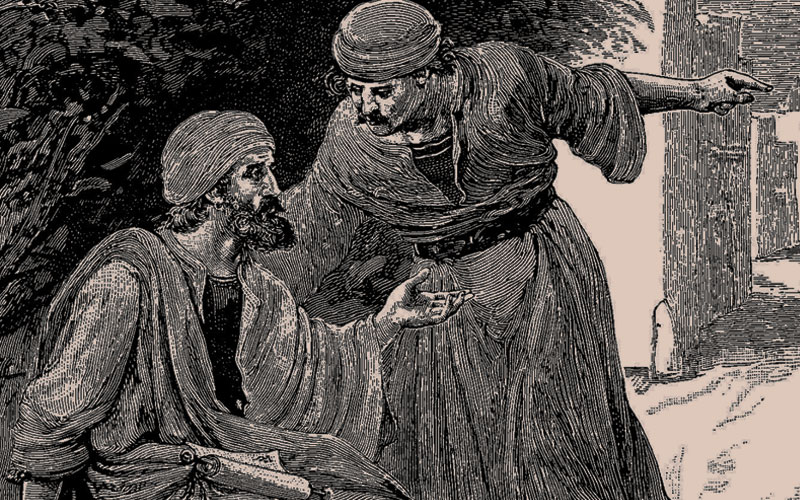
Man at Sunrise

When we discuss matters of religion or spirituality with others, we will find that many people base their views upon what they think. Even when we might present some clear passage of Scripture to show them a particular point, they will often respond by saying, “Well, I just think…” This is common among those in the world. Sadly, we often see this among brethren within the church as well.

The problem with basing our beliefs and practices on what we think is that we are not God. Even with the best of intentions, what we think does not justify us. This is the idea behind the following text:

‘For My thoughts are not your thoughts, nor are your ways My ways,’ declares the Lord. ‘For as the heavens are higher than the earth, so are My ways higher than your ways and My thoughts than your thoughts.

‘For as the rain and the snow comes down from heaven, and do not return there without watering the earth and making it bear and sprout, and furnishing seed to the sower and bread to the eater; so will My word be which goes forth from My mouth; it will not return to Me empty, without accomplishing what I desire, and without succeeding in the matter for which I sent it’” (Isaiah 55:8-11).

There is an important difference between God’s thoughts and our thoughts. We must learn to recognize and respect the difference.Continue Reading
The Enduring Word (Season 10, Episode 3)

Subscribe: iTunes | Stitcher | RSS

The Enduring Word (Season 10, Episode 3)

In this season, we’re discussing some lessons from Peter’s first epistle.

Peter described the word of God as being living and enduring. It has been given for us to obey it and grow by it.

Mentioned in this episode:

If you found this episode to be useful, please share it with others. Also, if you enjoyed the podcast, please leave a rating on iTunes or Stitcher. This also helps others hear about the podcast. Thanks.

“Come and See”

Philip and Nathanael

Philip found Nathanael and said to him, ‘We have found Him of whom Moses in the Law and also the Prophets wrote—Jesus of Nazareth, the son of Joseph.’ Nathanael said to him, ‘Can any good thing come out of Nazareth?’ Philip said to him, ‘Come and see’” (John 1:45-46).

In the first chapter of John, the apostle introduced his readers to Jesus. As this chapter unfolded, we read of others being introduced to Him as well. After Jesus called Philip (John 1:43), Philip told Nathanael that they had found the one who was the fulfillment of the prophecies contained in the Law and the Prophets. At first Nathanael was skeptical, so Philip offered a simple invitation: “Come and see.” Nathanael came and saw which led him to believe in Jesus (John 1:49).

In this article, we are going to consider this “come and see” type of invitation and how we might be able to use it to help reach others with the gospel.Continue Reading

Great Days in History (Part 6): The Day of Judgment

Great Days in History

Therefore having overlooked the times of ignorance, God is now declaring to men that all people everywhere should repent, because He has fixed a day in which He will judge the world in righteousness through a Man whom He has appointed, having furnished proof to all men by raising Him from the dead” (Acts 17:30-31).

In this sixth lesson, we will be discussing the day of judgment. Like the second lesson, this may seem like a bit of a jump to go all the way from the day of Pentecost to here. However, we are not skipping so much as we are going to be summarizing the time between these two days.Continue Reading

Engaging in Good Deeds

Helping Hand

In Paul’s letter to Titus, he discussed several things related to the young evangelist’s work and what he was to teach. One of the points that Paul emphasized was the importance of engaging in good deeds.

Several times in the second half of the letter, the apostle mentioned “good deeds” and what Titus was to teach regarding them. In this article, we are going to look at what Paul wrote as this is just as necessary today as it was then.Continue Reading

Prayer for the Word to Spread

Praying with a Bible

Toward the end of Paul’s second letter to the church in Thessalonica, he requested prayers from the brethren. One of the reasons why the apostle wanted them to pray was so that the gospel would spread.

Finally, brethren, pray for us that the word of the Lord will spread rapidly and be glorified, just as it did also with you” (2 Thessalonians 3:1).

Continue Reading

Retain the Standard (Season 9, Episode 7)

Subscribe: iTunes | Stitcher | RSS

Retain the Standard (Season 9, Episode 7)

In this season, we’re discussing some lessons from Paul’s letters to Timothy and Titus.

Hold fast the pattern of sound words” (2 Timothy 1:13, NKJV). This was Paul’s instruction to a young evangelist. Like most other instructions we read in the New Testament, it is just as applicable to us today as it was to Timothy in the first century. But not all of these instructions are emphasized much today. It is not common to hear a denominational preacher talk about the New Testament pattern. There are some in the Lord’s church who do not like to talk about it much either.

In fact, if you emphasize the pattern, some will label you as a legalist or a Pharisee. But we know we must follow the pattern because that is what Paul told Timothy to do. So let us see what the Bible says about holding fast the pattern.

Article: Hold Fast the Pattern

Mentioned in this episode:

If you found this episode to be useful, please share it with others. Also, if you enjoyed the podcast, please leave a rating on iTunes or Stitcher. This also helps others hear about the podcast. Thanks.