"God Saw That It Was Good" (1/1)

Thought from today’s Bible reading from Genesis 1-3.

God saw that it was good” (Genesis 1:10).

Six times, the record of Creation tells us that God saw His work as good. These came after God created or ordered something – the creation of light (v. 3-4), separation of the dry land from the seas (v. 9-10), creation and growth of plants (v. 11-12), ordering of the sun, moon, and stars (v. 14-18), creation of sea life and birds (v. 20-21), and the creation of land animals (v. 24-25). At each point, the text indicates that God saw His progress and that it was good.
Continue Reading


Top 5 Articles on Plain Bible Teaching in 2011

It is interesting to go back and see what articles struck a chord with visitors. Below are the top five articles that received the most page views in 2011. A couple of these are from previous years and are still getting a lot traffic.

  1. Are the Jews Still God’s Chosen People Today? (02.11.11)
  2. Some Reflections on the 2011 Florida College Chorus Tour (03.26.11)
  3. The Fields Are White for Harvest (08.09.09)
  4. A Leap of Faith (03.05.10)
  5. Some Thoughts on Easter (04.23.11)

Thanks for your continued interest in Plain Bible Teaching. There will be plenty more in 2012. If you haven’t done so already, sign up for the PBT Weekly Newsletter to stay up to date on all the new content and more.

Thoughts on the New Year

Happy New Year

As the beginning of another year rapidly approaches, Christians can use this time in three ways: as a reminder, as an opportunity, and as a warning.
Continue Reading

“Greater Love Has No One Than This”

I Love Jesus

Shortly before His death, Jesus spoke to His disciples about love – the love He had for them and the love they were to have for Him.

Greater love has no one than this, that one lay down his life for his friends. You are My friends if you do what I command you” (John 15:13-14).

Continue Reading

Book Review: Coming To Christ

Coming To Christ: A Study of the Detailed Conversions in ActsI recently finished reading Aaron Erhardt’s book, Coming to Christ: A Study of the Detailed Conversions in Acts. As you can probably gather from the title, this book examines the conversion accounts in the book of Acts in order to show the consistent pattern for God’s plan of salvation.

Aaron does a good job explaining these passages in a way that is easy to understand. The Scriptures teach the essentiality of baptism for salvation and Aaron points this out in every case. Of course, much of the religious world denies that baptism is necessary for salvation. So Aaron also has a chapter addressing several arguments that are made against baptism.

The material in this book would be good for anyone who needs to learn what the Bible says about obeying the gospel. It is also good for Christians so that they might be prepared to teach others who are outside of the body of Christ and be equipped to show them what God requires of man.

You can learn more about this book by visiting the author’s website: Erhardt Publications.

After the Flood

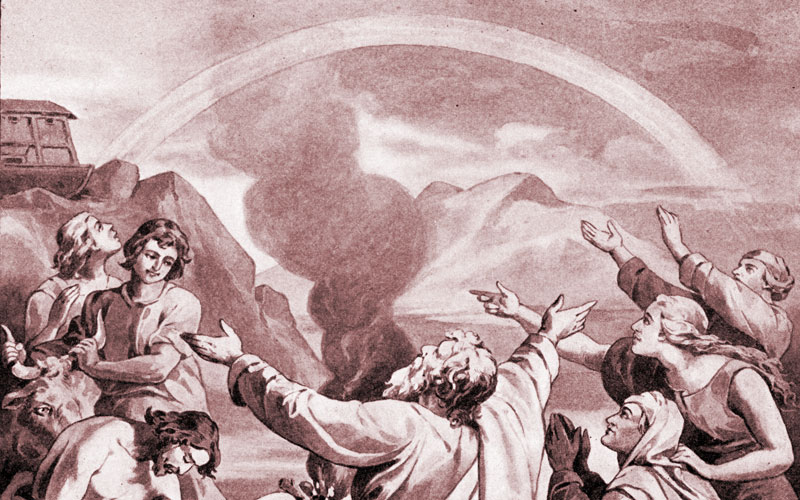
Noah and the Rainbow

Children grow up learning about Noah and the ark. As adults, we study the record of the flood and strive to learn the lessons it teaches – why it happened, how Noah was saved, Noah’s example of obedience, as so on. But there are also important lessons for us that came immediately after the flood. We will notice a few in this article.Continue Reading

Sounding Forth the Word

Tin can phone

The local church is God’s “missionary society” – the organization through which we work to spread the gospel. Though man has concocted many different schemes and systems since the time when Jesus established His church, the Lord’s design is for His message to be proclaimed through the work of individuals and local churches. Paul mentioned the church in Thessalonica as an example of how this simple arrangement can be successful.

For the word of the Lord has sounded forth from you, not only in Macedonia and Achaia, but also in every place your faith toward God has gone forth, so that we have no need to say anything” (1 Thessalonians 1:8).

Continue Reading