
The term “sheep” has become somewhat controversial in our current social and political climate. It is often used disparagingly to describe those who seem to naively follow whatever their leaders tell them to do, even if they are being told to do what appears to be foolish, harmful, irrational, or even wrong. Some have pushed back against this criticism by arguing that, as Christians, we have been called to be like sheep so we should simply follow whatever these orders might be (though each one who argues this will probably have in mind some limit as to how far they believe this compliance should go).
[Note: In this article, I am not going to address any specific cases in which this concept may arise; but I do believe it will be helpful for us to consider some general principles.]
Does the Bible say anything that would address this controversy? Let us consider some thoughts.Continue Reading



 In a time of lockdowns, shelter-in-place orders, and social distancing, we are more cut off from others than we had been previously. Obviously, there are challenges to this type of social arrangement – including spiritual challenges. One such challenge is that it is increasingly important for each of us to take personal responsibility for our faith and our standing before God. Paul mentioned this idea in his letter to the brethren in Philippi:
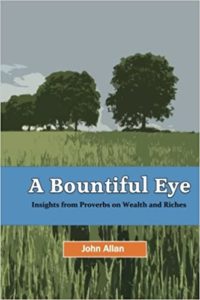 I recently had the chance to sit down and read A Bountiful Eye: Insights from Proverbs on Wealth and Riches by John Allan. As the subtitle indicates, the book examines what the wise man had to say in the book of Proverbs pertaining to wealth. This may be a topic that some Christians are uncomfortable talking about, yet it is one that the Scriptures address for us.