Jesus Destroyed Satan’s Power Over Death

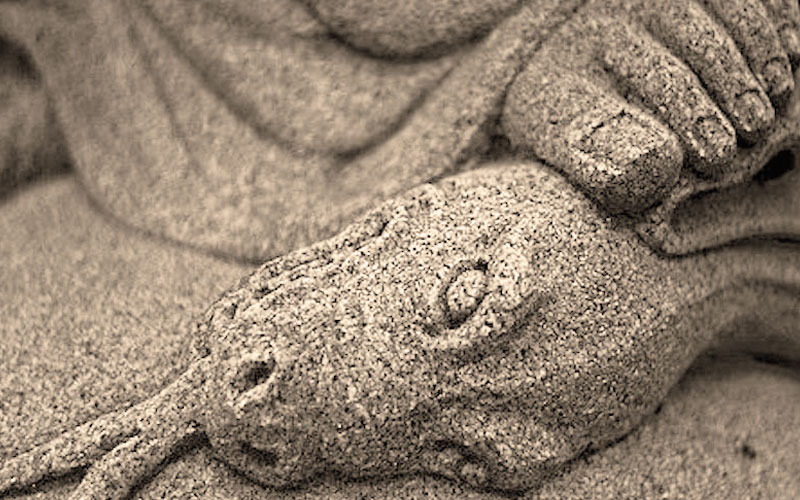
Jesus Crushing the Serpent Under Foot

The first prophecy in the Bible regarding the coming of Jesus was given after sin was introduced into the world in the Garden of Eden. In His curse to the serpent, God said, “And I will put enmity between you and the woman, and between your seed and her seed; He shall bruise you on the head, and you shall bruise him on the heel” (Genesis 3:15).

God was describing an event in which the seed of woman – Jesus – would be injured (His “heel” would be bruised) and Satan would be defeated (his “head” would be bruised or crushed). Remember that Satan came in the form of a serpent. We can imagine what would happen if someone were to kill a snake – one’s foot might be injured in crushing the head of the snake, but the snake would be killed. This prophecy was looking forward to the death of Christ.
Continue Reading

What Was Said About Jesus on the Cross (Season 4, Episode 5)

Subscribe: iTunes | Stitcher | RSS

What Was Said About Jesus on the Cross (Season 4, Episode 5)

Jesus’ death on the cross is the central event of the Bible. It is the sacrifice that made forgiveness, redemption, and salvation possible for all mankind. Jesus foretold of His death – “From that time Jesus began to show His disciples that He must go to Jerusalem, and suffer many things from the elders and chief priests and scribes, and be killed, and be raised up on the third day” (Matthew 16:21). The Scriptures prophesied of this event (Psalm 22; Isaiah 53). Sufficient evidence has been provided to produce belief. In addition to all the divinely given evidence, the gospel writers also record comments from some uninspired men as they speak about Jesus and His crucifixion. It is interesting to see what others understood about Him, even some without the benefit of Old Testament teaching. So in this episode, we’re going to look at the comments made about Jesus from four different individuals or groups.

Article: What Was Said About Jesus on the Cross

If you found this episode to be useful, please share it with others. Also, if you enjoyed the podcast, please leave a rating on iTunes or Stitcher. This also helps others hear about the podcast. Thanks.

The Priesthood of Christ (Season 4, Episode 4)

Subscribe: iTunes | Stitcher | RSS

The Priesthood of Christ (Season 4, Episode 4)

The writer of the book of Hebrews repeatedly spoke of things under the law of Christ as being better than those under the Law of Moses. With Christ, we have a better hope (Hebrews 6:19-20; 7:19), better covenant (Hebrews 7:22; 8:6), better promises (Hebrews 8:6), and a better sacrifice (Hebrews 9:23-28). The writer told his audience, “Consider Jesus, the Apostle and High Priest of our confession” (Hebrews 3:1). The role of the high priest was to offer sacrifices for sins (Hebrews 5:1) and be an intercessor between God and man (Hebrews 7:24-25). The nature of Christ’s priesthood is one of the things that is better under the new law. In this episode, let us consider the priesthood of Christ.

Article: The Priesthood of Christ

Mentioned in this episode:

If you found this episode to be useful, please share it with others. Also, if you enjoyed the podcast, please leave a rating on iTunes or Stitcher. This also helps others hear about the podcast. Thanks.

What Would Jesus Do?

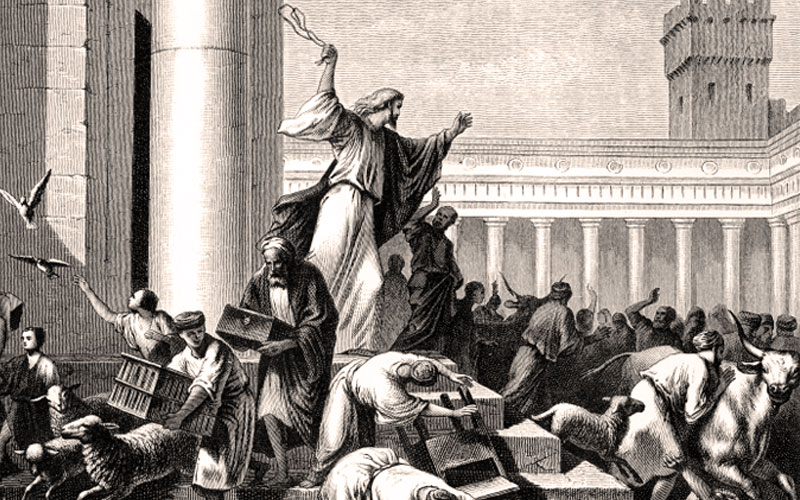
Jesus and the moneychangers

What would Jesus do? This is a question that many religious people ask themselves when they attempt to decide if a particular decision or activity is right. Their intentions might be good – trying to focus on Jesus and please Him. However, this question is the wrong question!

Why is this the wrong question? It is too subjective. It turns our responsibility into nothing more than what we think Jesus would do in a given situation. Instead of asking a subjective question like this (What would Jesus do?), let us consider some other questions to ask – questions for which we can find objective and definitive answers from the Scriptures.
Continue Reading

“Behold, the Lamb of God”

Cross

John’s mission was to prepare the way for Christ (Isaiah 40:3; Malachi 3:1). On a day when he saw Jesus coming to the place he was preaching and baptizing, John announced, “Behold, the Lamb of God who takes away the sin of the world!” (John 1:29).

There is a lot in John’s statement. Much of it may not have been understood at first. This is to be expected with prophecies. But as time went on and different things happened (Jesus’ life, death, resurrection, the establishment of His church, etc.), those who heard him could go back to declarations like this one and see more clearly the clues that were given and confirm the fact that God was behind all of this.
Continue Reading

The Three Things Jesus Accomplished in His Death

Cross

Toward the end of a lengthy discussion of Jesus’ work as our high priest, the Hebrew writer provided a summary in his explanation of Psalm 40:6-8. In this explanation, he spoke of the three things Jesus came to the earth to accomplish.
Continue Reading

The Lord’s Prayer in the Garden

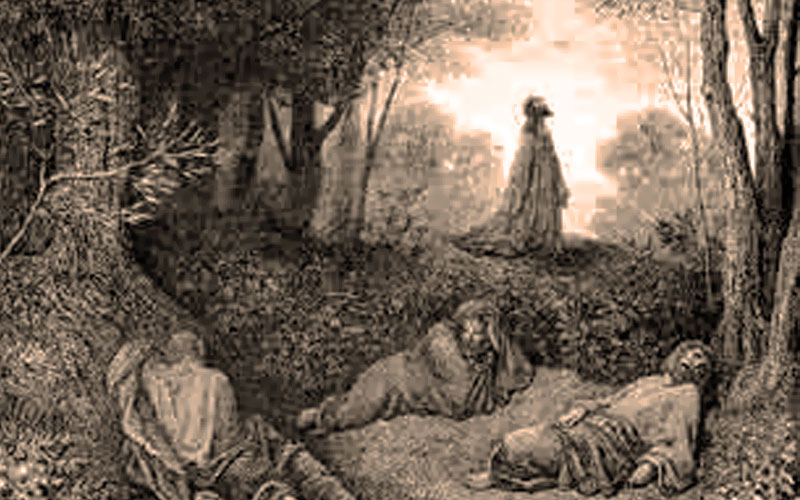
Jesus in the Garden

Shortly before His arrest, trials, beatings, and crucifixion, Jesus spent time in the Garden of Gethsemane praying to the Father. Some interpret this prayer in such a way as to try and show that Jesus was praying that He might escape death. They say that this was a moment of weakness for Jesus and describe Him as being in dread of the cross. They depict Jesus (perhaps unwittingly) as if He were some miserable coward. Can such an interpretation be correct?

Notice Matthew’s account of the Lord’s prayer:

Then Jesus came with them to a place called Gethsemane, and said to His disciples, ‘Sit here while I go over there to pray.’ And He took with Him Peter and the two sons of Zebedee, and began to be grieved and distressed. Then He said to them, ‘My soul is deeply grieved, to the point of death; remain here and keep watch with Me.’ And He went a little beyond them, and fell on His face and prayed, saying, ‘My Father, if it is possible, let this cup pass from Me; yet not as I will, but as You will.’ […] He went away again a second time and prayed, saying, ‘My Father, if this cannot pass away unless I drink it, Your will be done” (Matthew 26:36-39, 42).

After reading of His prayer, let us seek to answer this question: Did Jesus wish to avoid the cross?
Continue Reading