Imagining Jesus

Jesus and the moneychangers

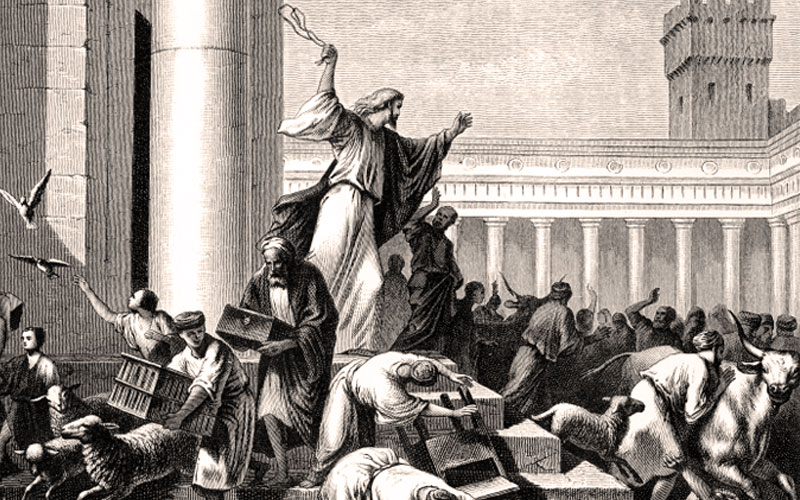
The Passover of the Jews was near, and Jesus went up to Jerusalem. And He found in the temple those who were selling oxen and sheep and doves, and the money changers seated at their tables. And He made a scourge of cords, and drove them all out of the temple, with the sheep and the oxen; and He poured out the coins of the money changers and overturned their tables” (John 2:13-15).

When Jesus came to Jerusalem for the Passover, He “cleansed” the temple, driving out the money changers and those selling animals. His actions must have been quite a shock to those who were driven out that day, as well as to those who were there to witness the event. Of course, many today would also be shocked to read this in the Bible.
Continue Reading


What Must I Do To Be Saved?

Question Mark Sign

This is the most important question one may ask. We know that all who are of accountable age “have sinned and fall short of the glory of God” (Romans 3:23). Many disregard sin as being an inconsequential matter. Others mock the very concept of sin. Yet the Scriptures paint a grave reality. Sin makes “a separation between you and your God” (Isaiah 59:2). Paul plainly affirmed, “The wages of sin is death” (Romans 6:23).
Continue Reading

Do Not Exceed What Is Written

Hand on Bible

Now these things, brethren, I have figuratively applied to myself and Apollos for your sakes, so that in us you may learn not to exceed what is written, so that no one of you will become arrogant in behalf of one against the other” (1 Corinthians 4:6).

Paul had to address several problems in his first letter to Corinth. One had to do with the brethren elevating men and regarding them as more important than they were. The apostle used himself and Apollos as an example in order to teach them “not to exceed what is written.” His warning was for them to not go beyond the limits of what God’s word allows. This principle is found throughout the letter. In this article, we will consider some points that Paul addressed in this letter in order to teach us – or remind us – not to exceed what is written and go beyond the boundaries of God’s word.
Continue Reading

Those Who Have No Right to Speak God’s Word

Microphone

We sometimes hear celebrities, politicians, and other godless people quoting (or misquoting) the Bible. They often do so in an attempt to defend an unscriptural position (e.g. support for same-sex “marriage,” opposition to the death penalty, etc.). When we hear them, we might think, “What business do they have in speaking about the Bible?” God asked the same type of question in the following text.

But to the wicked God says, ‘What right have you to tell of My statutes and to take My covenant in your mouth? For you hate discipline, and you cast My words behind you. When you see a thief, you are pleased with him, and you associate with adulterers. You let your mouth loose in evil and your tongue frames deceit. You sit and speak against your brother; you slander your own mother’s son. These things you have done and I kept silence; you thought that I was just like you; I will reprove you and state the case in order before your eyes” (Psalm 50:16-21).

There are certain ones who have no right to speak God’s word. Let us notice who was identified in the text.
Continue Reading

Ten Years

Deep in Thought

So, remove grief and anger from your heart and put away pain from your body, because childhood and the prime of life are fleeting” (Ecclesiastes 11:10).

Every hour, day, and year that passes is forever lost. Once time has passed, we can never get it back. Jesus said it is impossible to “add a single hour” to our lives (Matthew 6:27).

Within the last year, I have hit three different ten-year milestones in my personal life – the tenth birthday of my oldest son; ten years working with the church in Morgantown; and, with this article, closing out the first ten years of Plain Bible Teaching. This has led me to reflect upon how much can happen in a decade. So in this article, we are going to focus on five different ten-year periods in the Bible and see what lessons we can learn.
Continue Reading

Joshua Circumcised the People

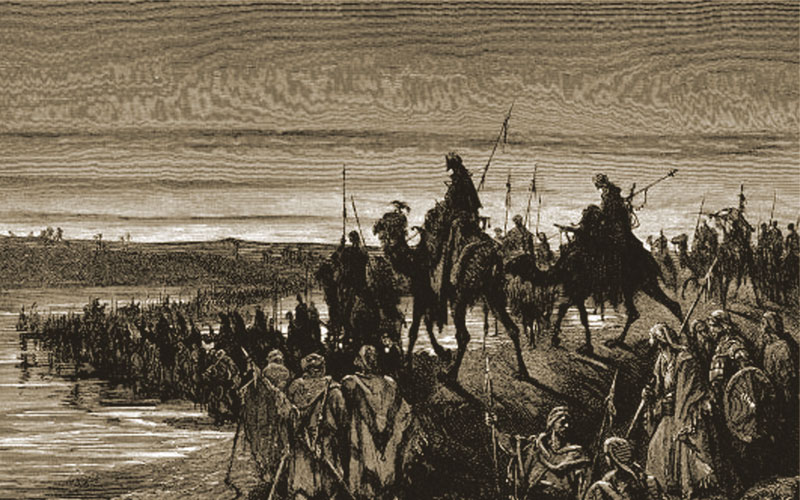
Crossing the Jordan River

At that time the Lord said to Joshua, ‘Make for yourself flint knives and circumcise again the sons of Israel the second time.’ So Joshua made himself flint knives and circumcised the sons of Israel at Gibeath-haaraloth.

This is the reason why Joshua circumcised them: all the people who came out of Egypt who were males, all the men of war, died in the wilderness along the way after they came out of Egypt. For all the people who came out were circumcised, but all the people who were born in the wilderness along the way as they came out of Egypt had not been circumcised. For the sons of Israel walked forty years in the wilderness, until all the nation, that is, the men of war who came out of Egypt, perished because they did not listen to the voice of the Lord, to whom the Lord had sworn that He would not let them see the land which the Lord had sworn to their fathers to give us, a land flowing with milk and honey. Their children whom He raised up in their place, Joshua circumcised; for they were uncircumcised, because they had not circumcised them along the way.

Now when they had finished circumcising all the nation, they remained in their places in the camp until they were healed. Then the Lord said to Joshua, ‘Today I have rolled away the reproach of Egypt from you.’ So the name of that place is called Gilgal to this day” (Joshua 5:2-9).

After crossing the Jordan river into the land of Canaan (Joshua 3), but before conquering the first city (Joshua 6), the Lord commanded Joshua to circumcise the sons of Israel. It is important that we understand the reasons why this was done because their physical circumcision is parallel to our spiritual circumcision. Let us consider some lessons that we can learn from this account.
Continue Reading

Who Is Affected By Sin?

Pollution

Many people choose to ignore sin. Sadly, even some Christians do this. They ignore the sins of others because they see the sins as being between them and God and so they are of no concern. They often ignore their own sin believing that God’s grace will cover them. Yet sin cannot be ignored.

The earth is also polluted by its inhabitants, for they transgressed laws, violated statutes, broke the everlasting covenant” (Isaiah 24:5).

In the verse above, sin is described as pollution. This analogy is used because sin affects more than just the one who committed the sin. So in this article, I want us to consider this question: Who is affected by sin?
Continue Reading