If You Have Been Raised Up with Christ

Sun and clouds

The resurrection of Christ is one of the matters “of first importance” in the gospel (1 Corinthians 15:3-4). It provides us with hope beyond this life (1 Corinthians 15:17-22). We should always remember and give thanks for this event.

As Christ was raised, we must be “raised up with [Him]” (Colossians 3:1). When Paul wrote the letter to the Colossians, he was writing to those who had been raised with Christ. He explained what this obligated them to do. Let us consider what our responsibility is after being “raised up with Christ.
Continue Reading

Why Were They Called “churches of Christ”?

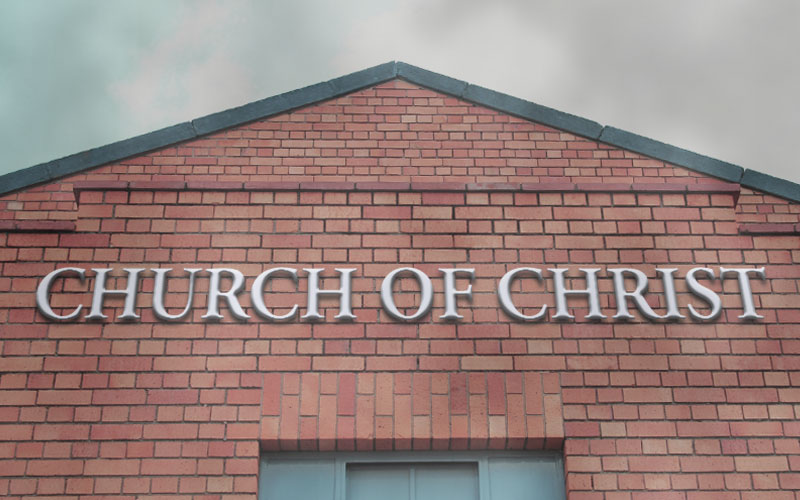
Church of Christ

Greet one another with a holy kiss. All the churches of Christ greet you” (Romans 16:16).

Paul referred to the congregations with which he was associated as “churches of Christ.” Many brethren, in an effort to follow the New Testament pattern, have also used this to identify local churches. However, some brethren have quit using this designation, choosing instead to identify themselves as “The Church in ___” or merely placing a sign in front of their building that says, “Christians Meet Here.” Of course, many more in the denominational world use other names to identify their churches (Baptist, Methodist, Catholic, etc.).

Our desire must be to please Christ and serve Him faithfully. So let us consider this question: Why were those local churches in the first century called “churches of Christ” and what bearing does this have on us today?
Continue Reading

Why Being Non-Denominational Is Not Good Enough

Church steeple

In the past, more emphasis was placed upon one’s denominational affiliation. But for many today, this is less important. This shift in mindset has given rise to the number of “non-denominational” churches we see in the religious world.

For years, faithful brethren have rightly condemned denominationalism. So is the trend toward non-denominationalism a good thing? Maybe not. Why not? Simply being non-denominational is not good enough.

The church in Sardis was a dead church, though they had a reputation that they were alive. Jesus said to them, “I know your deeds, that you have a name that you are alive, but you are dead” (Revelation 3:1). This shows us that a church can seem to be good in the eyes of men, but in the eyes of the Lord, their status is completely different. In the eyes of many, “non-denominational” churches look appealing. But like the church in Sardis, many of these churches simply do not measure up to the Lord’s standard.
Continue Reading

What Would Jesus Do?

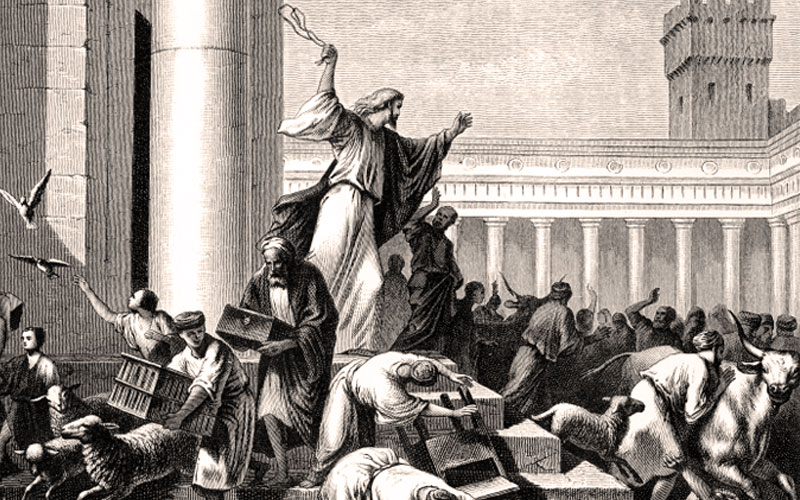
Jesus and the moneychangers

What would Jesus do? This is a question that many religious people ask themselves when they attempt to decide if a particular decision or activity is right. Their intentions might be good – trying to focus on Jesus and please Him. However, this question is the wrong question!

Why is this the wrong question? It is too subjective. It turns our responsibility into nothing more than what we think Jesus would do in a given situation. Instead of asking a subjective question like this (What would Jesus do?), let us consider some other questions to ask – questions for which we can find objective and definitive answers from the Scriptures.
Continue Reading

The Problem with Denominations

Church building

Simon Peter answered, ‘You are the Christ, the Son of the living God.’ And Jesus said to him, ‘Blessed are you, Simon Barjona, because flesh and blood did not reveal this to you, but My Father who is in heaven. I also say to you that you are Peter, and upon this rock I will build My church; and the gates of Hades will not overpower it’” (Matthew 16:16-18).

In the first century, there were no denominations – only the Lord’s church (Matthew 16:18). Paul said there is just “one body” (Ephesians 4:4), and that body is the church (Ephesians 1:22-23).

But today, unlike the first century, there are thousands of denominations. Is this a problem? Many will say “no.” They have been taught to “join the church of your choice” because “one church is as good as another.” But the Scriptures teach that this is a problem. Why? In this article we will notice four reasons why denominationalism is a problem.
Continue Reading

Can One Be a Christian Without Having Been Baptized?

BaptismThe denominational world has different opinions about baptism. Many believe it is a “work” that is in no way associated with our salvation. Some will call it “an outward sign of an inward grace” – in other words, it is a sign that one has already been saved. Some may practice baptism as an entrance into membership into a denominational body. Though there are many different ideas about baptism, the denominational world generally agrees on one point – they reject baptism as a requirement for salvation. Even though they might practice baptism (at least in some form), they would say that one could be a Christian even without water baptism.

However, the Scriptures plainly emphasize the importance of baptism and its connection with salvation:
Continue Reading

How Long Will You Hesitate Between Two Opinions?

Fork in the Road

Just before Elijah’s confrontation with the prophets of Baal on Mount Carmel, he issued a challenge to the people of Israel who had gathered to witness the event.

Elijah came near to all the people and said, ‘How long will you hesitate between two opinions? If the Lord is God, follow Him; but if Baal, follow him.’ But the people did not answer him a word” (1 Kings 18:21).

The people were presented with a choice between two options – follow God or follow Baal. Similarly, we have choices to make about our personal conduct and religion. Many people like to think that they have a multitude of options from which to choose. But when you break down every decision, there are really just two options – follow God or not.
Continue Reading