The Seed of the Sower

The Sower

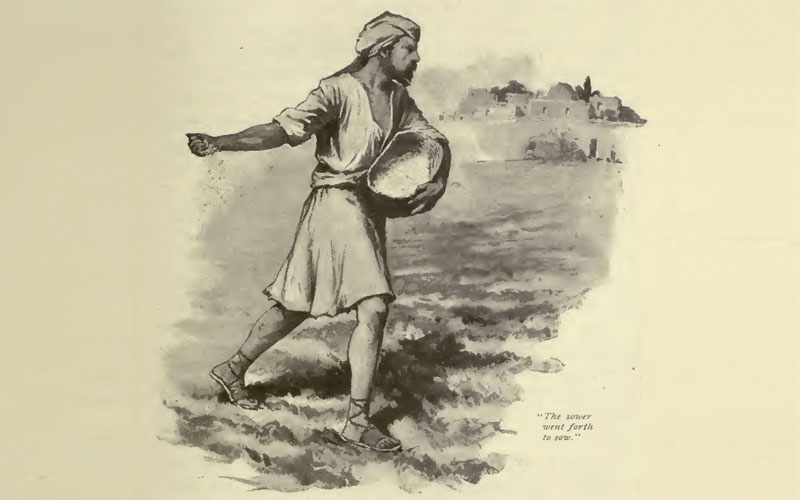
The parable of the sower is one of the more familiar parables spoken by Jesus. In it, He taught an important lesson about the type of message that is required in order to produce fruit.
Continue Reading

How God Is Able to Establish You

Bible

As Paul concluded his epistle to the Romans, he praised God for His ability to establish them (Romans 16:25-27). This means He was able to make them strong, complete, and equipped to follow Him and to face the trials that exist in this life. Is God able to establish us today? If so, how?

Earlier in this letter, Paul expressed a desire to come to them in Rome: “For I long to see you so that I may impart some spiritual gift to you, that you may be established” (Romans 1:11). What were these spiritual gifts that Paul would impart to them in order to establish them? These miraculous gifts of the Spirit are enumerated in the first letter to Corinth and included such gifts as knowledge, prophecy, and the ability to speak in tongues (1 Corinthians 12:7-11). Do we need to have some miraculous spiritual gift in order to be established today? If so, we are in trouble because Paul later said that such miraculous spiritual gifts would be “done away” and replaced with the completed revelation in the word of God (1 Corinthians 13:8-10). This is what we need in order to be established today – the word of God. In our text, Paul described the word in several different ways, showing how it is able to establish us.
Continue Reading

Hard-Headed Preachers

Hard-Headed Preachers

We do not typically think of the term “hard-headed” as being a compliment when it is used to describe someone. Yet the Bible teaches that it is an essential characteristic of one who would proclaim the word of God. When God commissioned Ezekiel to “go to the house of Israel and speak with My words to them” (Ezekiel 3:4), appointing him as “a watchman to the house of Israel” (Ezekiel 3:17), God gave the prophet a hard-headed demeanor so that he would be able to accomplish his task.
Continue Reading

Some Reflections on the 2011 Florida College Chorus Tour

Being a former student of Florida College and knowing a good number of people who have an affinity to the school, I thought it was important to pass along this article about the troubling practice of the Florida College Chorus performing religious songs.

The performance of these types of songs by the Chorus is nothing new. But the announcement for this year’s tour indicated that “songs, narrations, and scripture readings focusing on the death and resurrection of Jesus” would be included in the performance. During the two years I attended Florida College, I never attended a Chorus concert (even then, I was uncomfortable with these religious songs being performed as entertainment). Shortly after leaving the school, I reluctantly agreed to attend one of these performances when the Chorus came to town on their tour — perhaps I would see my concerns were unfounded (I learned they were not). But I do not remember “narrations and scripture readings” being part of the performance. This appears to be one more step away from the New Testament pattern and toward a pattern of denominational-styled worship experiences.
Continue Reading

A Noble Reception of the Gospel

After being run out of town in Thessalonica, Paul was sent to Berea. Here he continued doing the very thing that had previously stirred up opposition against him – teaching the gospel (Acts 17:1-5, 10). Fortunately, these individuals in Berea were “more noble-minded” than the ones Paul encountered in the last city. What was it that made them noble-minded? It had to do with their reception of the gospel.

Now these were more noble-minded than those in Thessalonica, for they received the word with great eagerness, examining the Scriptures daily to see whether these things were so” (Acts 17:11).

This verse shows us three reasons why the Bereans were called “noble-minded.” In addition, we can see how we should receive preaching and teaching today.
Continue Reading

“Christ Did Not Send Me to Baptize”

Baptism

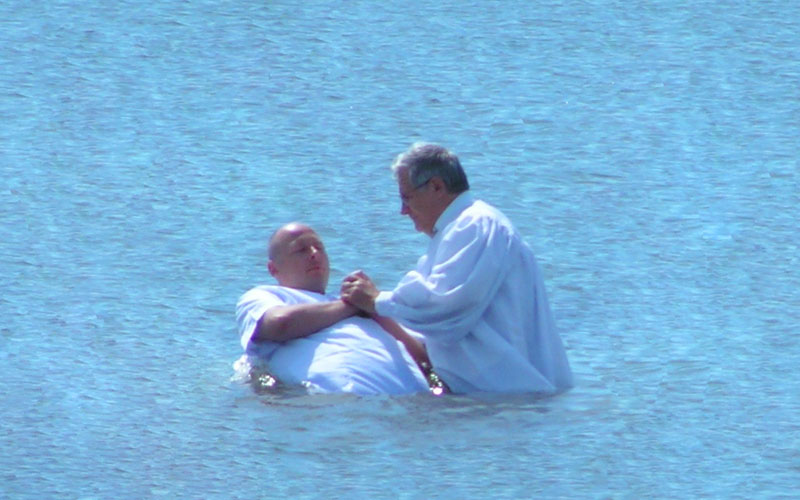
There is a sharp divide in the religious world over the subject of baptism. Some, including myself, teach that baptism is necessary for salvation. Many others teach that one can be saved before or without water baptism.

Paul made an interesting statement in his first letter to the church at Corinth. Considered independently from the immediate context and the rest of the New Testament, it could easily be used to argue that baptism is not necessary for salvation. Notice what he told the brethren:

For Christ did not send me to baptize, but to preach the gospel, not in cleverness of speech, so that the cross of Christ would not be made void” (1 Corinthians 1:17).

Paul said he was not sent to baptize. From that, are we to conclude that baptism is not a prerequisite to salvation? Before we jump to that conclusion, let us take a closer look at what the Scriptures teach.
Continue Reading

The Trouble with the Census

Although David was a man after God’s own heart (Acts 13:22), he did make mistakes. The one that usually comes to our mind first was his sin with Bathsheba. But he later committed an offense so severe that the Lord sent a pestilence which killed 70,000 people (2 Samuel 24:15). What was his sin? He took a census of the people.

Satan was the one who influenced David to do this (1 Chronicles 21:1). But what was it about numbering the people that was so wrong. Why was it that David’s counting of the people constituted a victory for Satan?
Continue Reading